🔥 FREE PRO OFFER OnlyLink.click Pro Version is 100% Free of Cost till 31 December, 2026! Claim Free Pro

Software Architecture

Quarkus vs Spring Boot: Which Java Framework Should You Choose?

Quarkus vs Spring Boot: Which Java Framework Should You Choose?

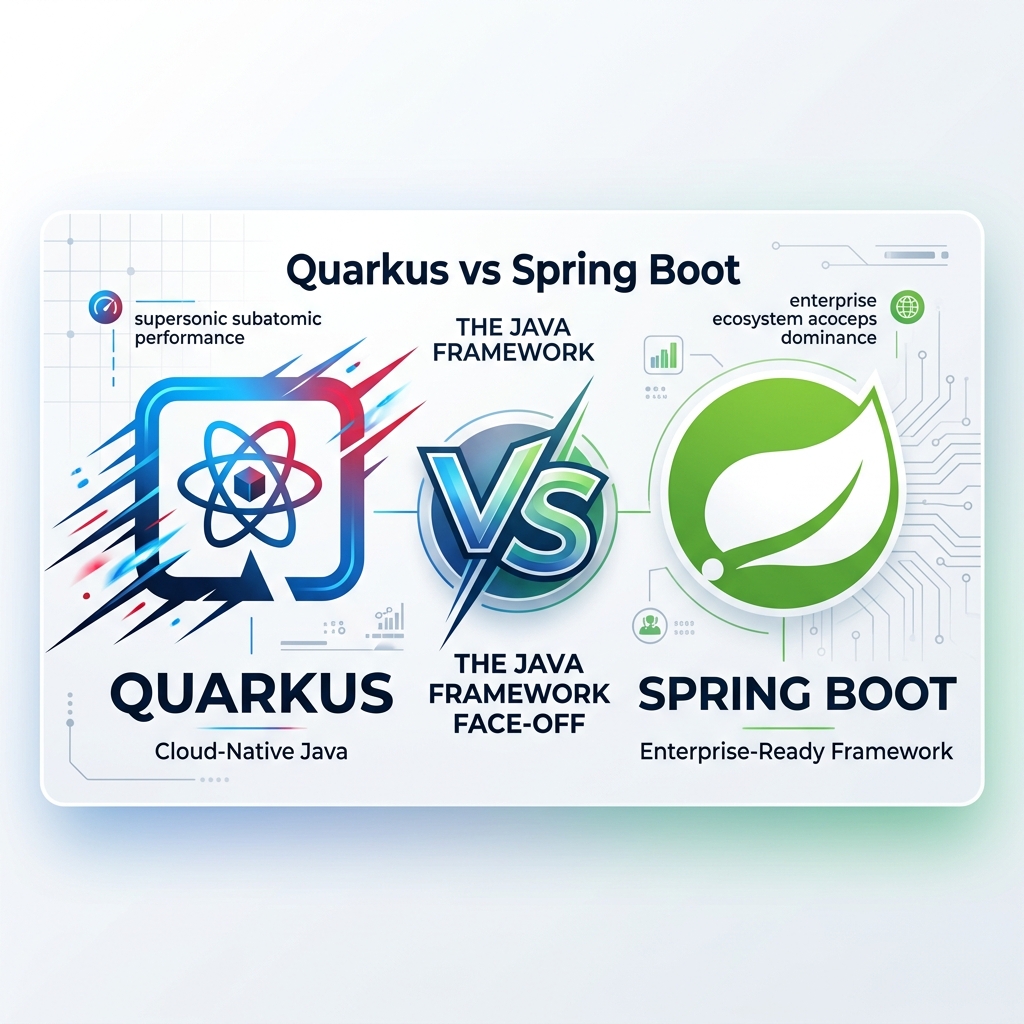
For over a decade, Spring Boot has reigned supreme as the de facto standard for building enterprise Java applications. Its rich ecosystem, convention-over-configuration paradigm, robust dependency injection engine, and vast community support made Java the bedrock of backend systems worldwide. However, the shift toward Cloud-Native Architectures, Kubernetes orchestration, Docker containerization, and Serverless execution (AWS Lambda, Knative) introduced new technical challenges for backend infrastructure: memory efficiency, instant scaling, and cold-start latency.
Java Quarkus Spring Boot GraalVM Microservices Cloud Native Kubernetes JVM Software Architecture

Introduction to Quarkus: Why Java Developers Are Moving to Supersonic Java

Introduction to Quarkus: Why Java Developers Are Moving to Supersonic Java

For nearly three decades, Java has been the dominant force in enterprise software development. Its rich ecosystem, robust object-oriented foundation, platform independence via the Java Virtual Machine (JVM), and battle-tested frameworks like Spring Boot made it the undisputed king of backend infrastructure. However, the shift toward Cloud-Native Architectures, Kubernetes orchestration, Containerization (Docker), and Serverless Computing (AWS Lambda, Knative) exposed a severe vulnerability in traditional Java application frameworks: high memory overhead and slow startup times.
Java Quarkus GraalVM Microservices Cloud Native Spring Boot JVM Software Architecture Serverless

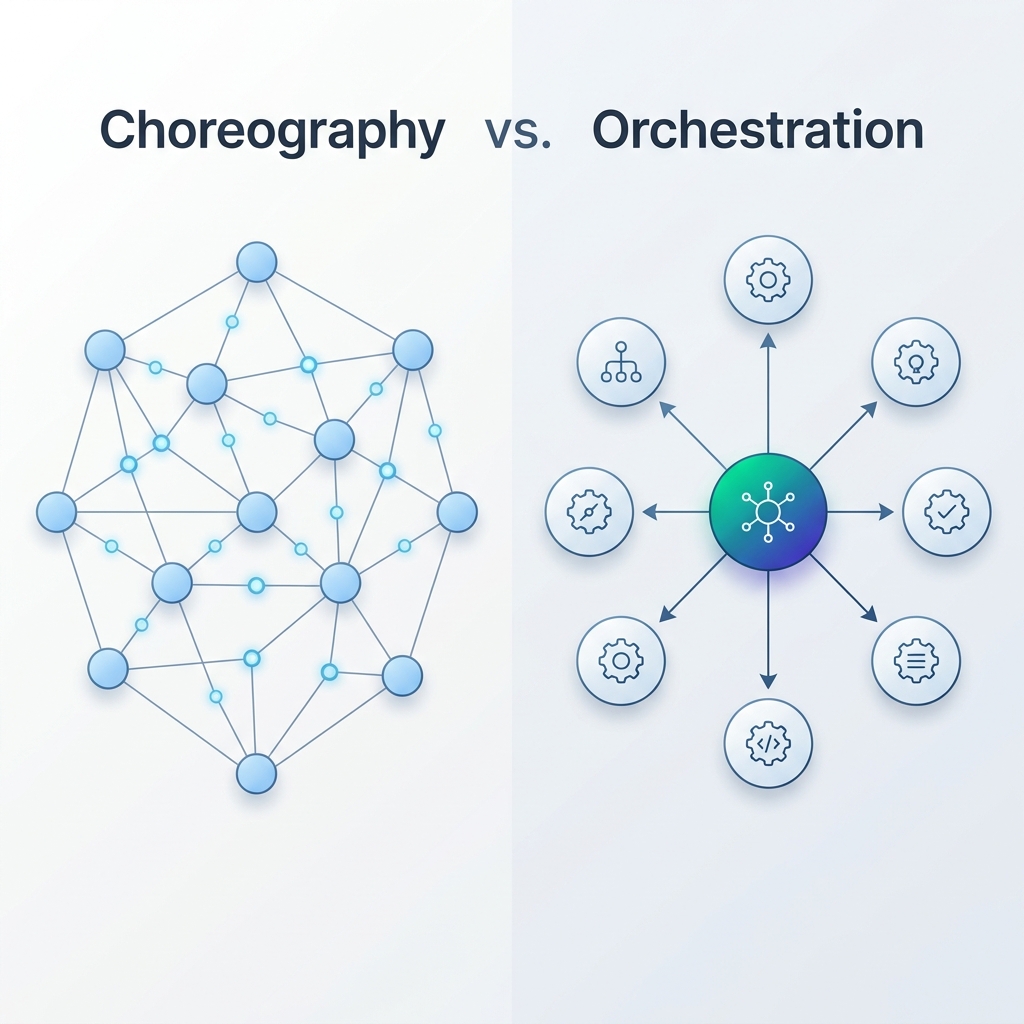
Choreography vs. Orchestration: Designing Distributed Workflows in Microservices

Choreography vs. Orchestration: Designing Distributed Workflows in Microservices

In a monolithic architecture, executing a complex business transaction—such as fulfilling an e-commerce order—is straightforward. All data resides in a single relational database, allowing developers to wrap multiple database writes across inventory, payments, and shipping inside a single ACID transaction. If an error occurs at any point, a SQL ROLLBACK instantly restores system consistency. However, modern cloud-native systems adopt a Microservices Architecture, where each service owns its data and exposes distinct API boundaries. In this distributed paradigm, a single end-to-end business operation spans multiple independent microservices and database engines.
Microservices Choreography Orchestration System Design Distributed Systems Saga Pattern Event-Driven Architecture Software Architecture
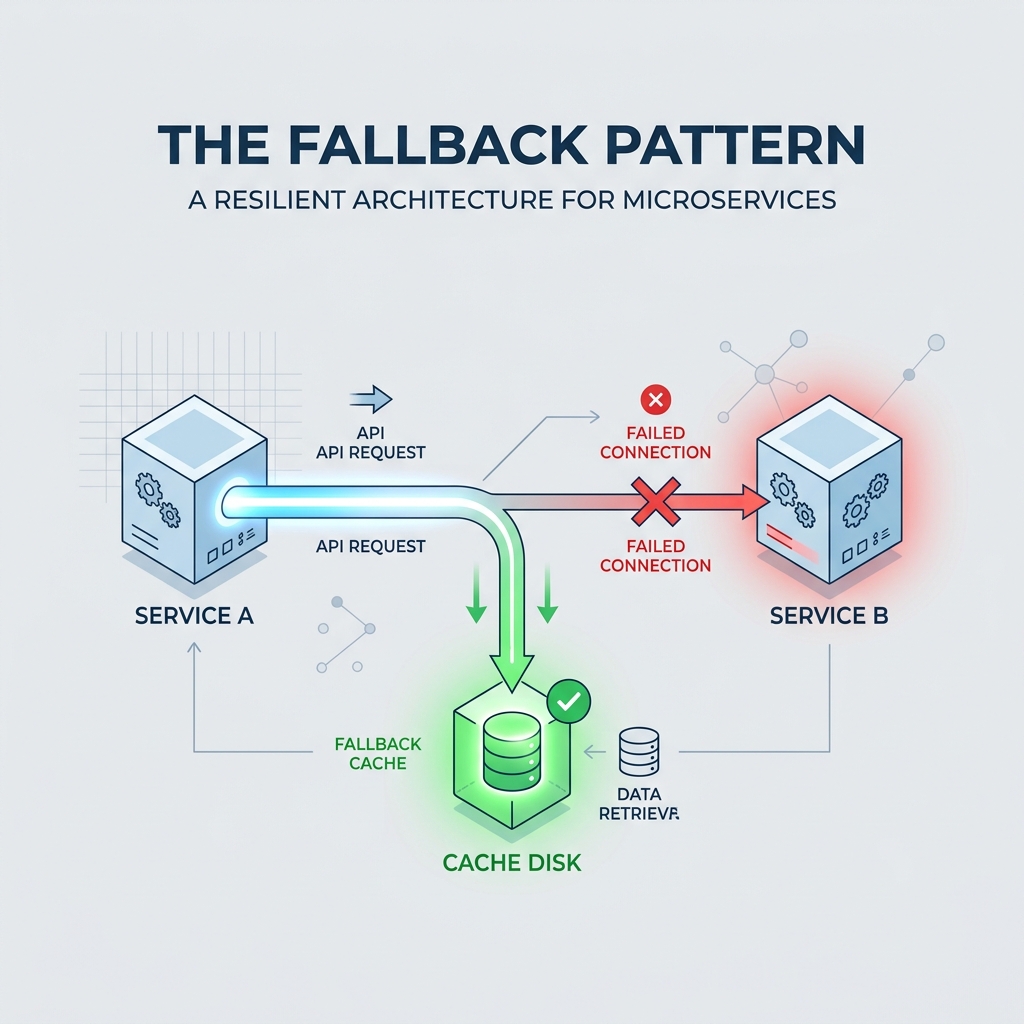
The Fallback Pattern: Designing Graceful Degradation in Microservices

The Fallback Pattern: Designing Graceful Degradation in Microservices

In a microservices architecture, services form a web of distributed network calls. While this allows teams to build and scale services independently, it also means that the overall reliability of your system is only as strong as its weakest link. If a critical service goes down or becomes unresponsive, it can trigger a cascading failure that disrupts the entire application.
Microservices Fallback Pattern Software Architecture System Design Fault Tolerance Resilience
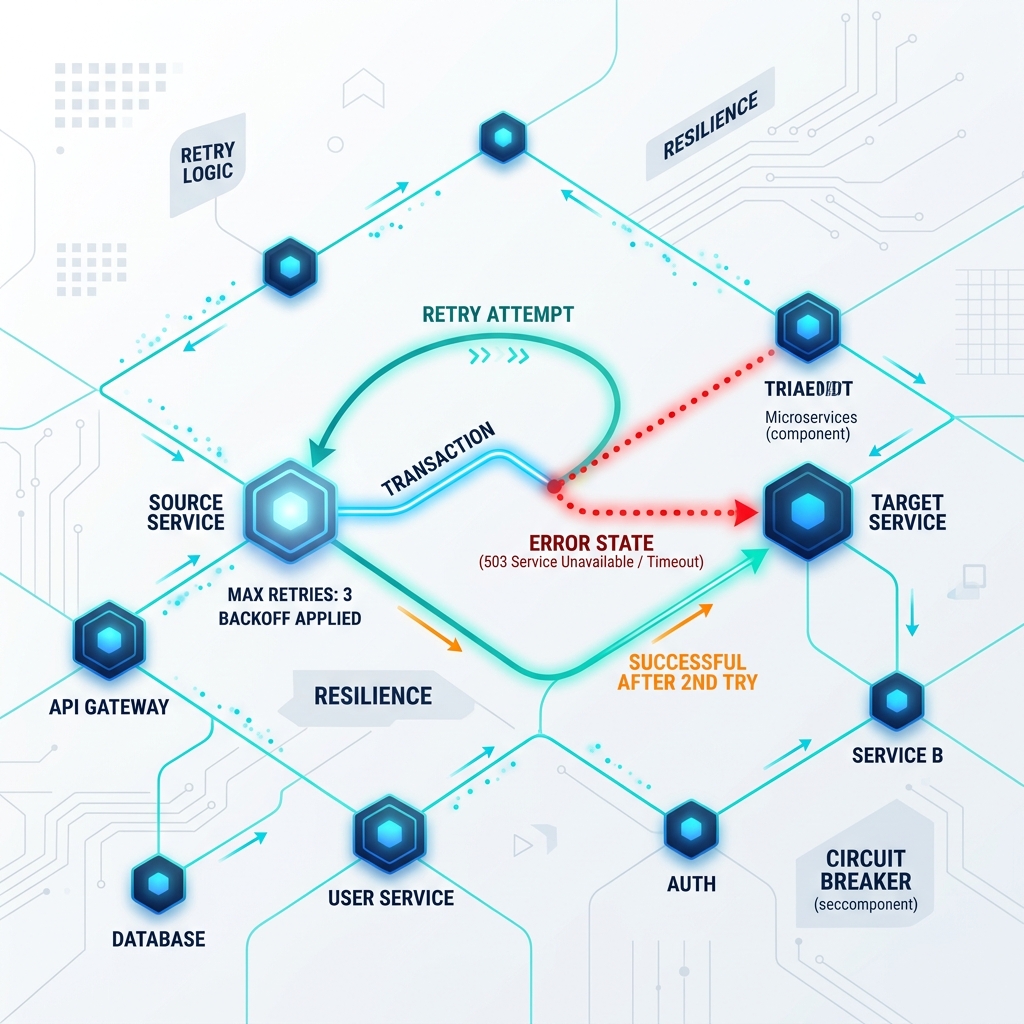
The Retry Pattern: Building Resilient Microservices

The Retry Pattern: Building Resilient Microservices

In a microservices architecture, services communicate over a network rather than in-memory calls. While this decoupling enables massive horizontal scaling and independent deployments, it also introduces a major vulnerability: the network is unreliable. At any moment, a downstream service might experience a brief network glitch, a temporary CPU spike, a quick database lock contention, or a rolling update restart. These temporary failures are known as transient faults.
Microservices Retry Pattern Software Architecture System Design Fault Tolerance Resilience
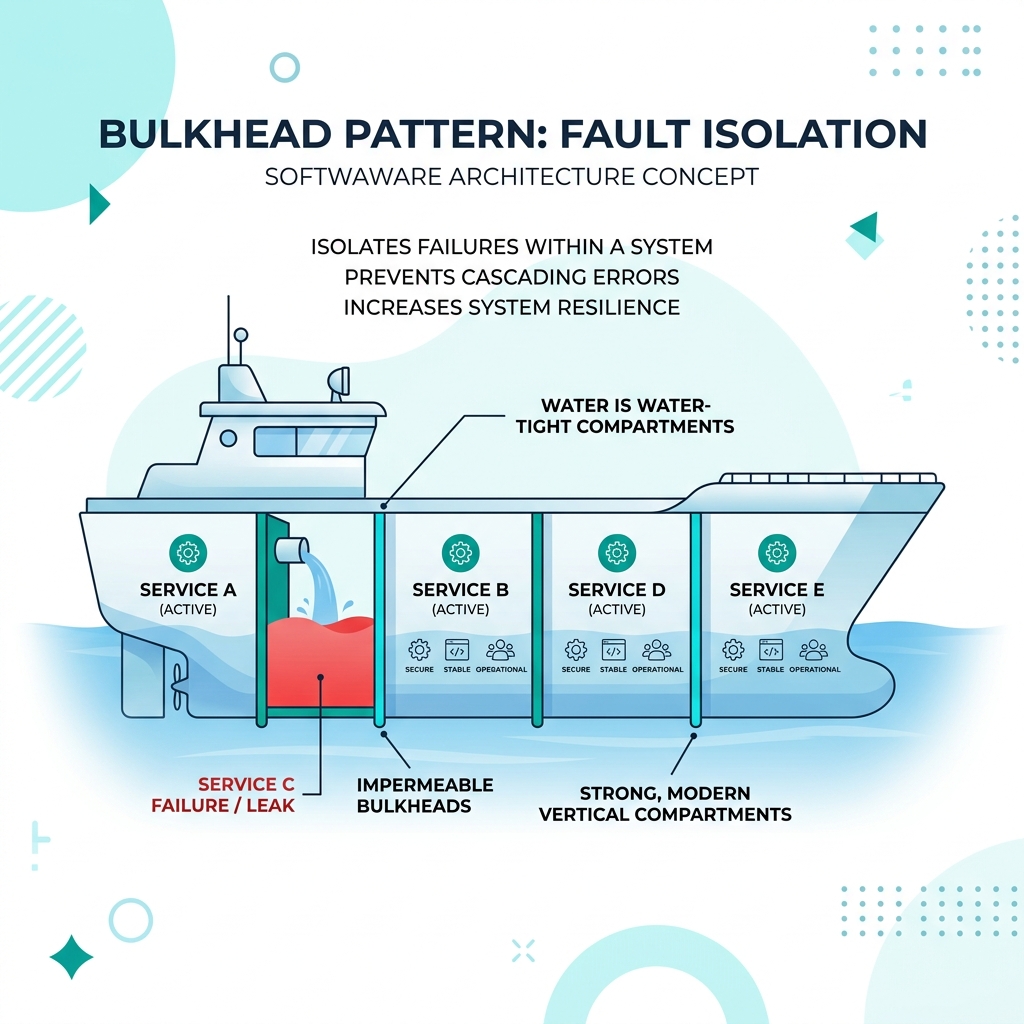
The Bulkhead Pattern: Designing Fault-Tolerant Microservices

The Bulkhead Pattern: Designing Fault-Tolerant Microservices

In a microservices architecture, a single application is broken down into dozens or hundreds of independent, collaborating services. While this design improves modularity and scalability, it also introduces a major risk: a failure in one service can cascade and bring down the entire system. If a downstream service becomes sluggish or unresponsive, incoming requests to your upstream services will start to pile up. If they all share the same memory, CPU, or thread pool, a slow dependency can quickly exhaust all available resources, causing your entire application to crash.
Microservices Bulkhead Pattern Software Architecture System Design Fault Tolerance Resilience
The Sidecar Pattern: Extending Microservices Without Modifying Code

The Sidecar Pattern: Extending Microservices Without Modifying Code

In modern cloud-native systems, microservices are expected to do much more than run business logic. They must handle logging, manage SSL/TLS certificates, collect metrics, implement retry mechanisms, and coordinate secure communications with other services. If we embed all of this cross-cutting functionality directly inside each application’s codebase, we end up with code bloat, tight coupling, and language lock-in.
Microservices Sidecar Pattern Software Architecture System Design Kubernetes DevOps
The Strangler Fig Pattern: A Safe Way to Migrate Monolithic Applications

The Strangler Fig Pattern: A Safe Way to Migrate Monolithic Applications

In modern software engineering, legacy monolithic applications are a common challenge. Over time, a successful codebase grows so large and interconnected that making simple changes becomes risky, deployments take hours, and scaling individual features is virtually impossible. When teams decide to modernize their systems by migrating to microservices, they face a high-stakes question: How do we rewrite the system without breaking our current business?
Software Architecture Microservices Monolith Migration System Design Strangler Fig API Routing Refactoring
Understanding the Backend for Frontend (BFF) Pattern: A Simple Guide

Understanding the Backend for Frontend (BFF) Pattern: A Simple Guide

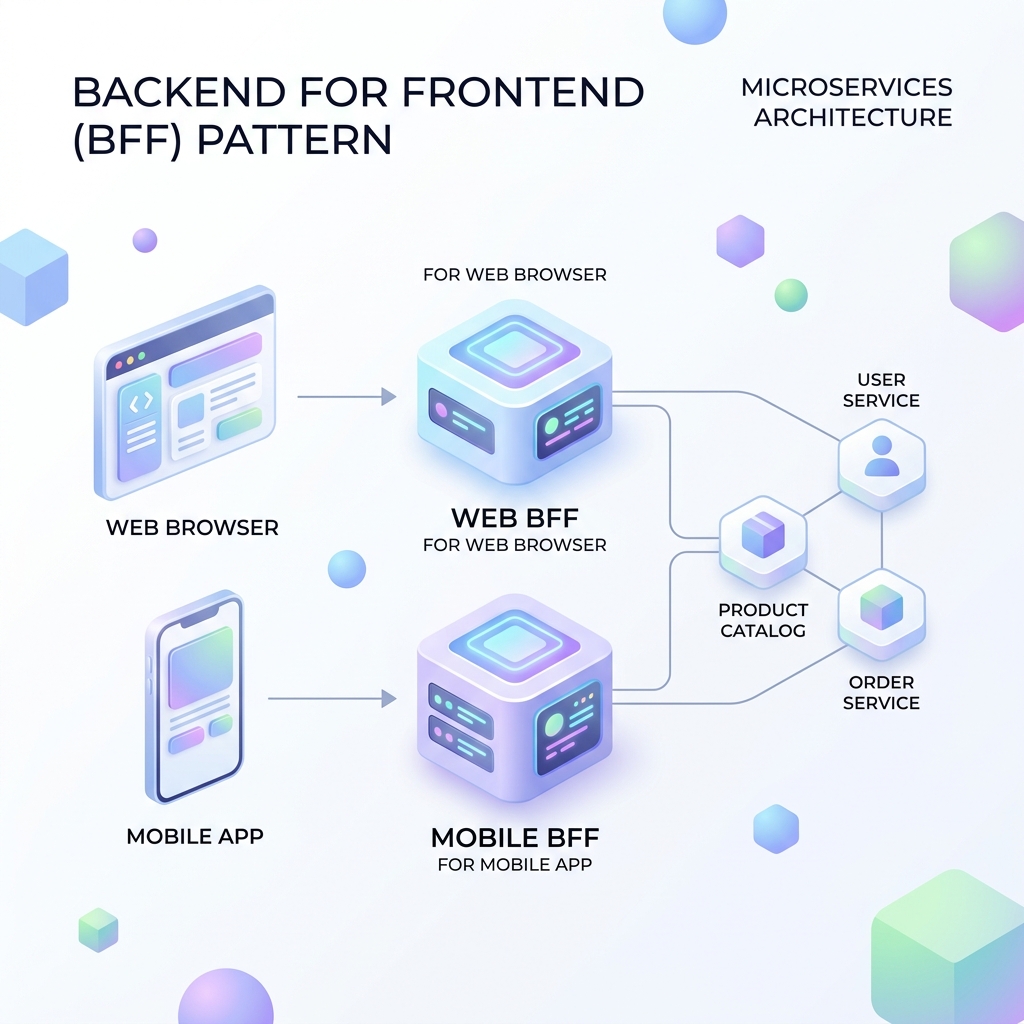
In a microservices architecture, our systems are broken down into dozens of small, focused services—like a User Service, an Order Service, and a Product Service. But when it comes to displaying this information to your users, different devices have very different needs. A web browser on a high-speed desktop computer wants a rich dashboard full of tables, sidebars, and graphs. A mobile app on a slow cellular network wants a simple, lightweight layout to save bandwidth and battery. A smartwatch app might only need a single line of text.
Microservices BFF Pattern Backend for Frontend Software Architecture System Design Node.js
Understanding the API Gateway Pattern in Microservices: A Simple Guide

Understanding the API Gateway Pattern in Microservices: A Simple Guide

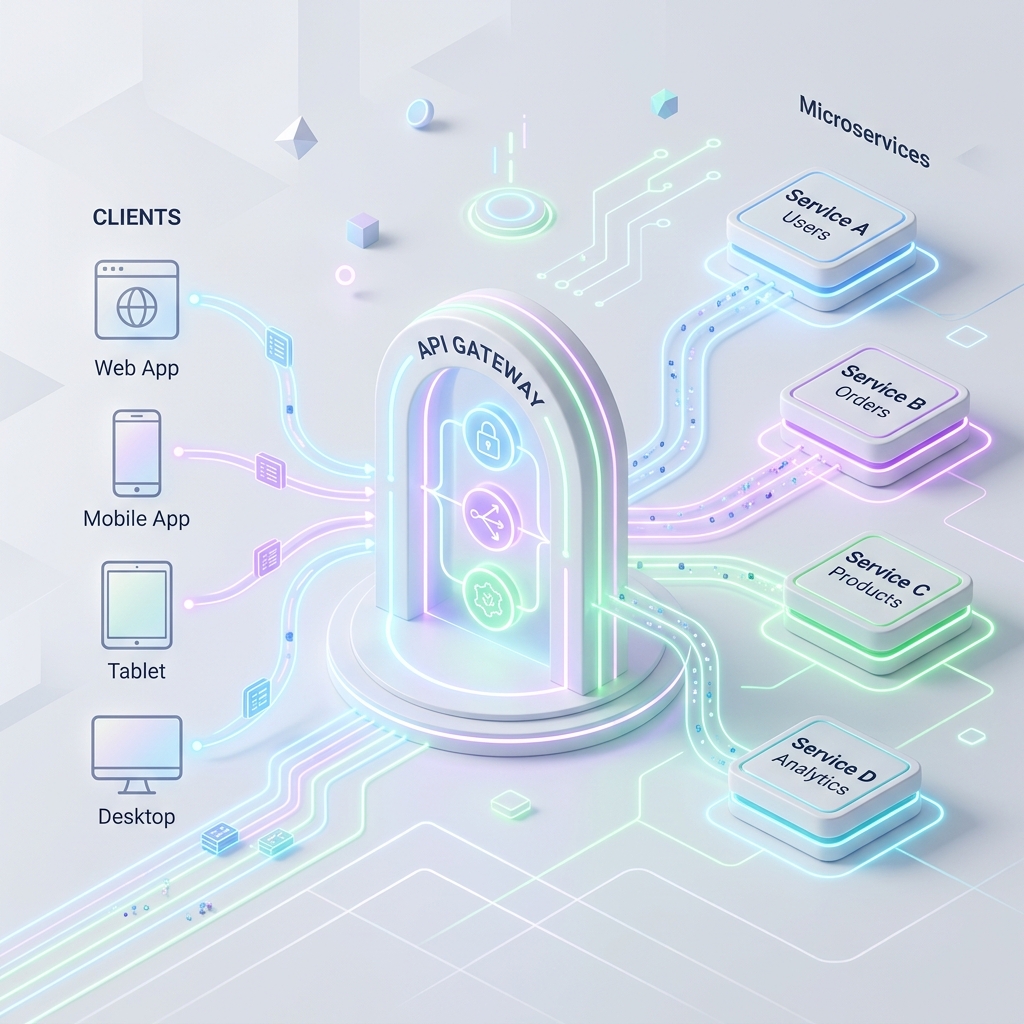
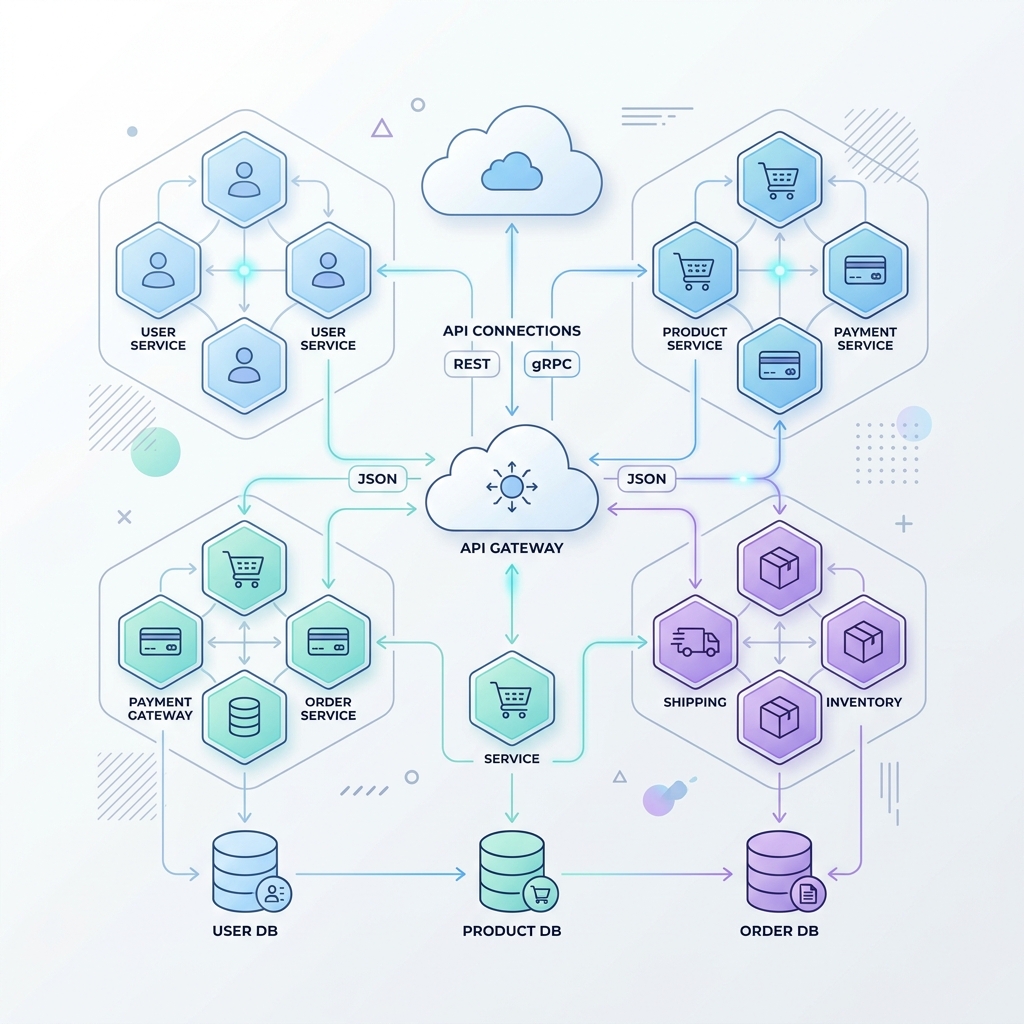
Transitioning from a single, monolithic application to a microservices architecture solves many problems. It allows teams to work independently, deploy services separately, and scale parts of the system as needed. However, it also introduces a new challenge: how do clients interact with all these independent services? If you have ten, fifty, or hundreds of tiny microservices, should a mobile app or web page connect to each one of them directly?
Microservices API Gateway Software Architecture System Design Routing Security
Why Modern Microservices Prefer gRPC Over REST

Why Modern Microservices Prefer gRPC Over REST

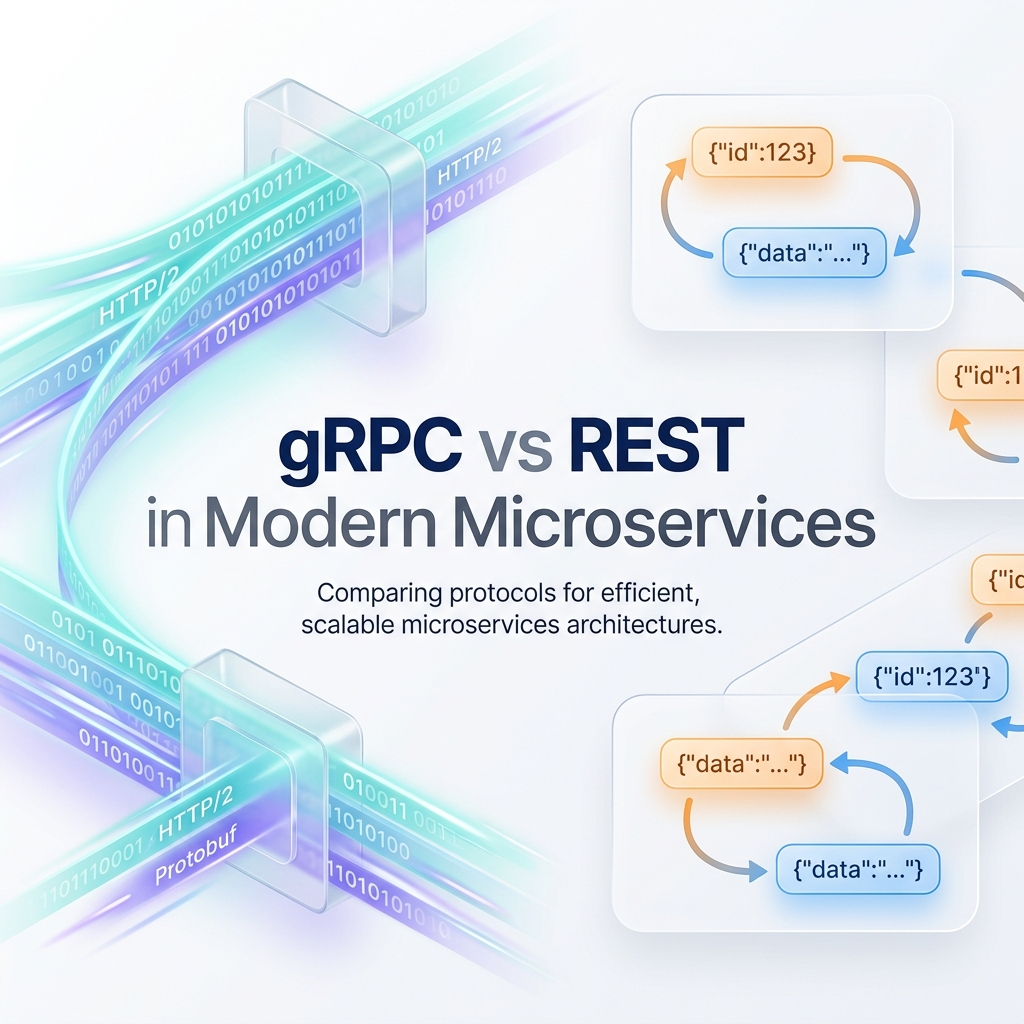
In a monolithic architecture, components communicate via in-memory method calls, which are instantaneous and highly reliable. When moving to a microservices architecture, however, these components are separated by network boundaries. Communication becomes an out-of-process network call (Inter-Process Communication, or IPC). For years, REST (Representational State Transfer) over HTTP/1.1 with JSON payloads has been the default standard for building web APIs. While REST is excellent for public-facing web services and client-to-server interaction, it introduces significant bottlenecks when used for high-frequency, low-latency, internal service-to-service communication.
gRPC REST Microservices Java Protocol Buffers HTTP/2 Software Architecture API Design
Domain-Driven Design (DDD) in Microservices

Domain-Driven Design (DDD) in Microservices

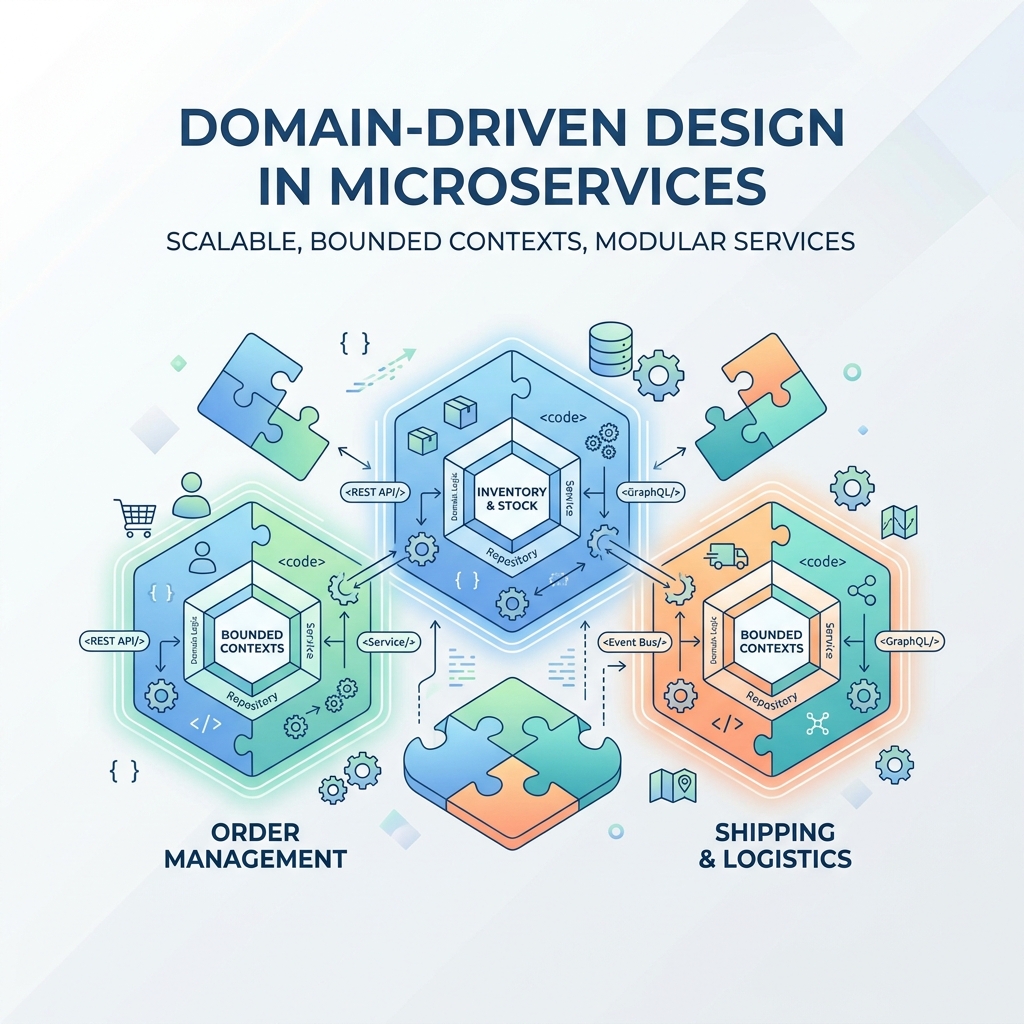
When organizations transition from a monolithic architecture to microservices, they face a critical, high-stakes question: How do we draw the boundaries of our services? In theory, microservices should be loose, decoupled units that can be developed, deployed, and scaled independently. In practice, however, many teams end up building a distributed monolith—a system where services are so tightly coupled that a single business change requires modifying and deploying multiple services simultaneously, compounding network latency and deployment gridlocks.
Microservices Domain-Driven Design DDD Software Architecture Bounded Context System Design
Benefits and Challenges of Microservices in Modern Applications

Benefits and Challenges of Microservices in Modern Applications

In the early days of web development, building a software application was straightforward: you wrote code, packaged it into a single executable or deployable archive, and ran it on a server. This approach, known as the Monolithic Architecture, served the industry well for decades. However, as applications grew into massive enterprise platforms with hundreds of developers and millions of concurrent users, monoliths began to show their limits. Deployments became slow and risky, databases became bottlenecks, and codebases grew too complex for any single developer to comprehend.
Microservices Software Architecture Distributed Systems API Gateway Saga Pattern DevOps
How Go Handles Concurrency Better Than Traditional Threading Models

How Go Handles Concurrency Better Than Traditional Threading Models

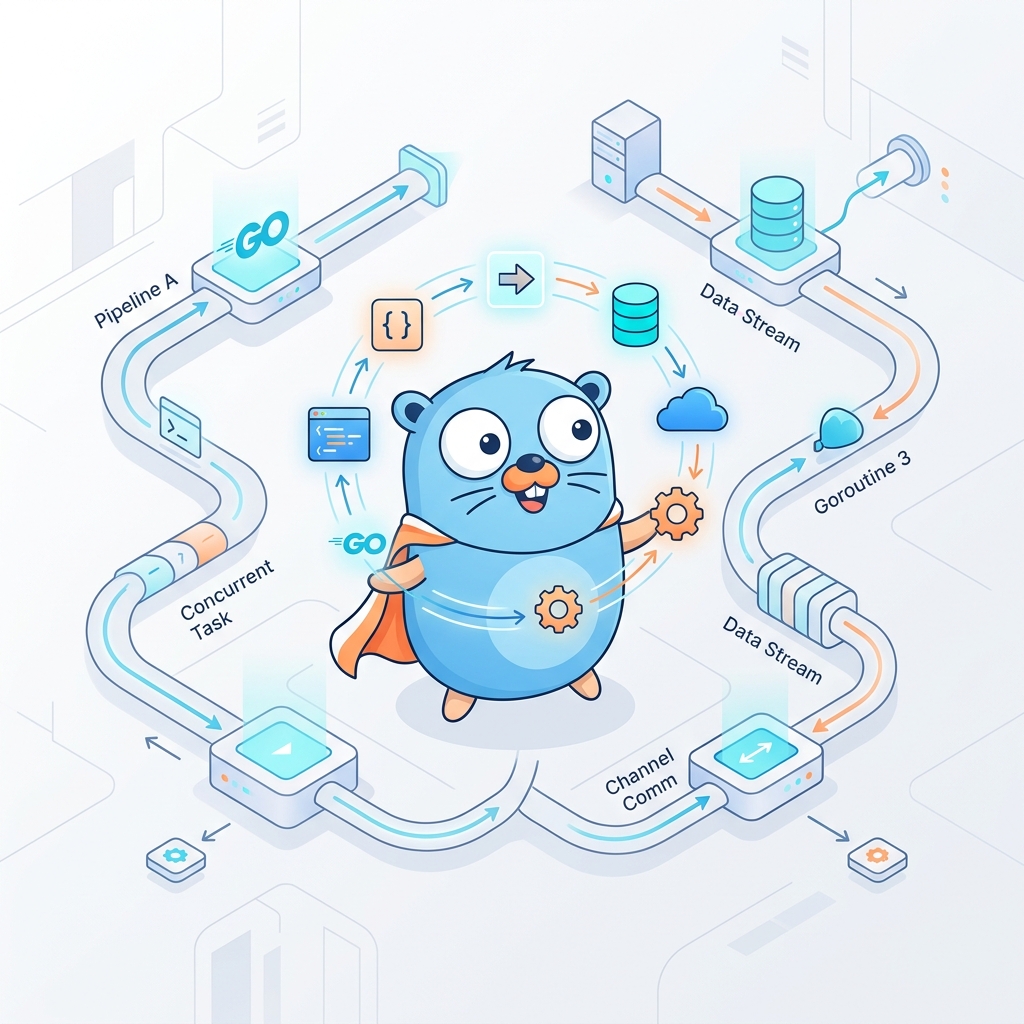
In modern software engineering, building applications that can perform multiple tasks simultaneously is no longer a luxury—it is a core requirement. From high-throughput web servers to real-time streaming services, concurrency is at the heart of performance. For decades, traditional programming languages like C++, Java, and Python relied on the operating system’s native threading models to handle concurrent tasks. However, when Google designed Go (Golang) in the late 2000s, they took a radically different path. Instead of exposing raw OS threads, Go introduced Goroutines and a specialized M:N Scheduler.
Go Golang Concurrency Goroutines M:N Scheduler Channels Software Architecture
Building Autonomous AI Workflows with LLMs

Building Autonomous AI Workflows with LLMs

Large Language Models (LLMs) have transformed how we interact with technology, moving rapidly from simple conversational chatbots to reasoning engines capable of driving complex, multi-step actions. While a single prompt-response interaction can be powerful, the real value of generative AI in enterprise settings lies in Autonomous AI Workflows. Rather than relying on human operators to orchestrate every step, autonomous workflows use LLMs as central decision-makers that plan, execute, evaluate, and self-correct tasks over long periods.
AI Agents LLMs Orchestration Software Architecture Machine Learning