🔥 FREE PRO OFFER OnlyLink.click Pro Version is 100% Free of Cost till 31 December, 2026! Claim Free Pro

AI

How Enterprises Are Combining AI and Blockchain for Smarter Automation

How Enterprises Are Combining AI and Blockchain for Smarter Automation

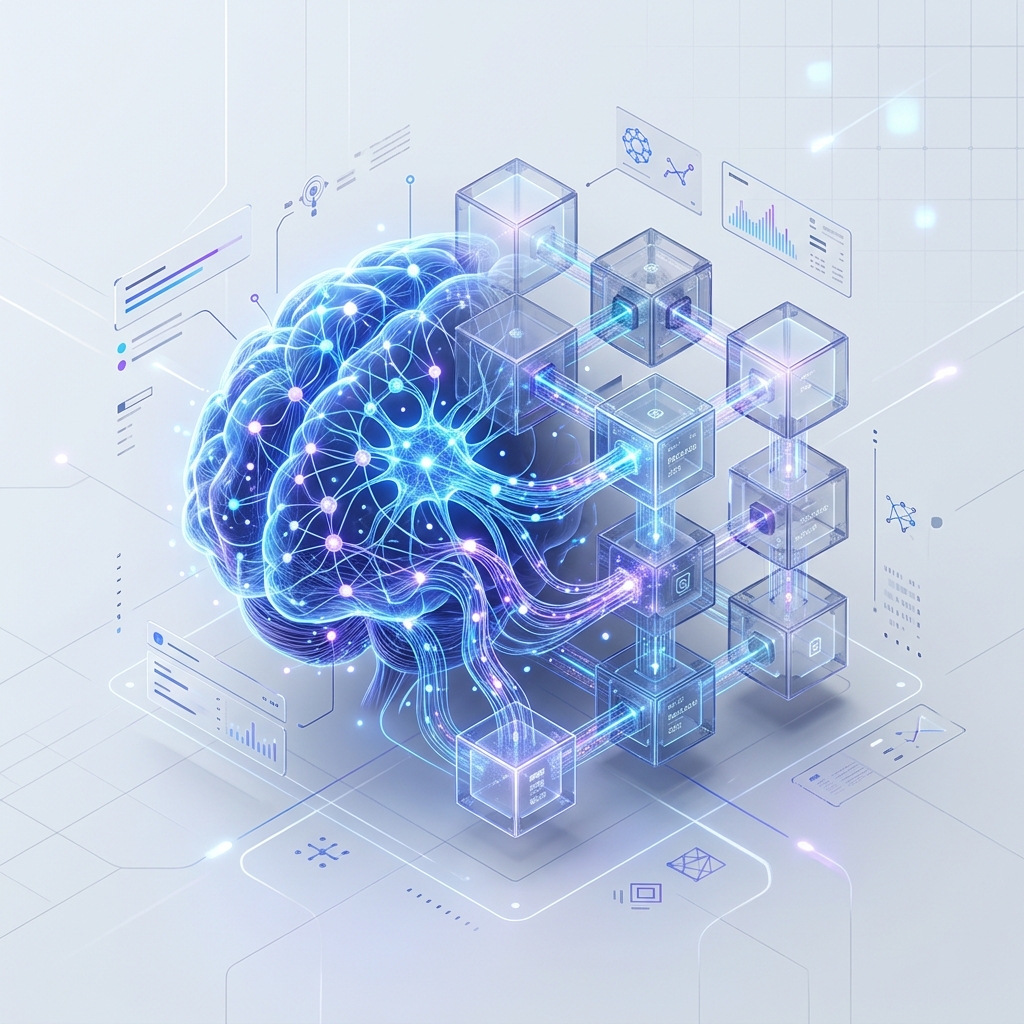
In modern enterprise architecture, two technology paradigms are rapidly converging to redefine how business processes are automated: Artificial Intelligence (AI) and Blockchain. AI brings advanced cognitive abilities, pattern recognition, and unstructured data processing—representing the “brain” of enterprise applications. Blockchain brings absolute transparency, cryptographic verification, and decentralized consensus—representing the “backbone of trust”.
AI Blockchain Smart Contracts Enterprise Automation Web3 Oracles

Building Autonomous AI Workflows with LLMs

Building Autonomous AI Workflows with LLMs

Large Language Models (LLMs) have transformed how we interact with technology, moving rapidly from simple conversational chatbots to reasoning engines capable of driving complex, multi-step actions. While a single prompt-response interaction can be powerful, the real value of generative AI in enterprise settings lies in Autonomous AI Workflows. Rather than relying on human operators to orchestrate every step, autonomous workflows use LLMs as central decision-makers that plan, execute, evaluate, and self-correct tasks over long periods.
AI Agents LLMs Orchestration Software Architecture Machine Learning
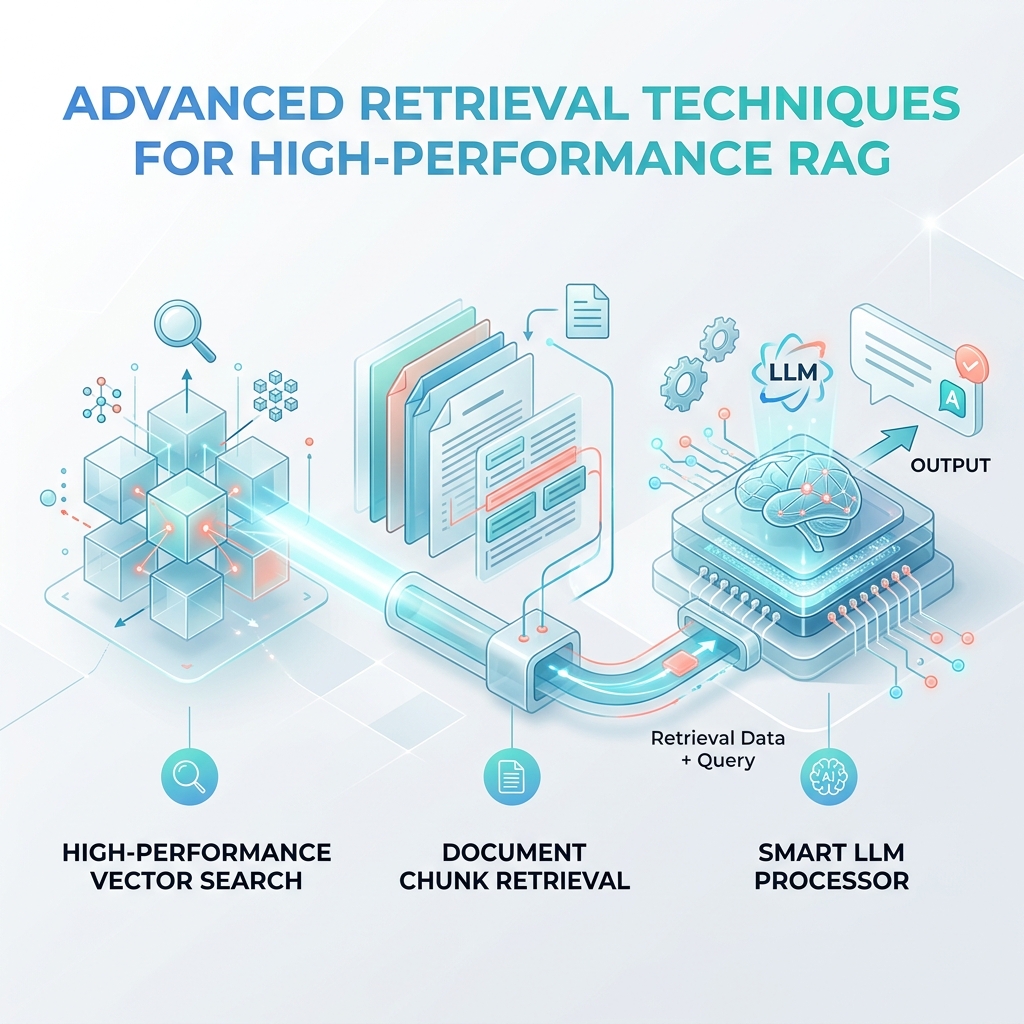
Advanced Retrieval Techniques for High-Performance RAG: Optimizing LLM-Powered Systems

Advanced Retrieval Techniques for High-Performance RAG: Optimizing LLM-Powered Systems

Retrieval-Augmented Generation (RAG) has become the backbone of enterprise AI applications, but as systems scale and queries become more complex, basic retrieval methods fall short. The difference between a slow, inaccurate RAG system and a high-performance one often comes down to the retrieval strategy. This comprehensive guide explores advanced retrieval techniques that dramatically improve RAG performance, accuracy, and scalability. Whether you’re building customer support bots, knowledge assistants, or enterprise search systems, these strategies will transform your RAG pipeline.
AI RAG LLMs Vector Search Information Retrieval Machine Learning Performance Optimization
Generative AI Explained: How Machines Learn to Create

Generative AI Explained: How Machines Learn to Create

Generative AI is one of the most transformative technological shifts of the 21st century. Unlike traditional AI systems that classify, predict, or detect, Generative AI creates — text, images, audio, video, code, and even three-dimensional structures. It is the technology behind ChatGPT writing articles, Midjourney painting photorealistic art, and GitHub Copilot completing entire functions from a comment.
AI Generative AI LLMs Deep Learning Machine Learning GPT Diffusion Models
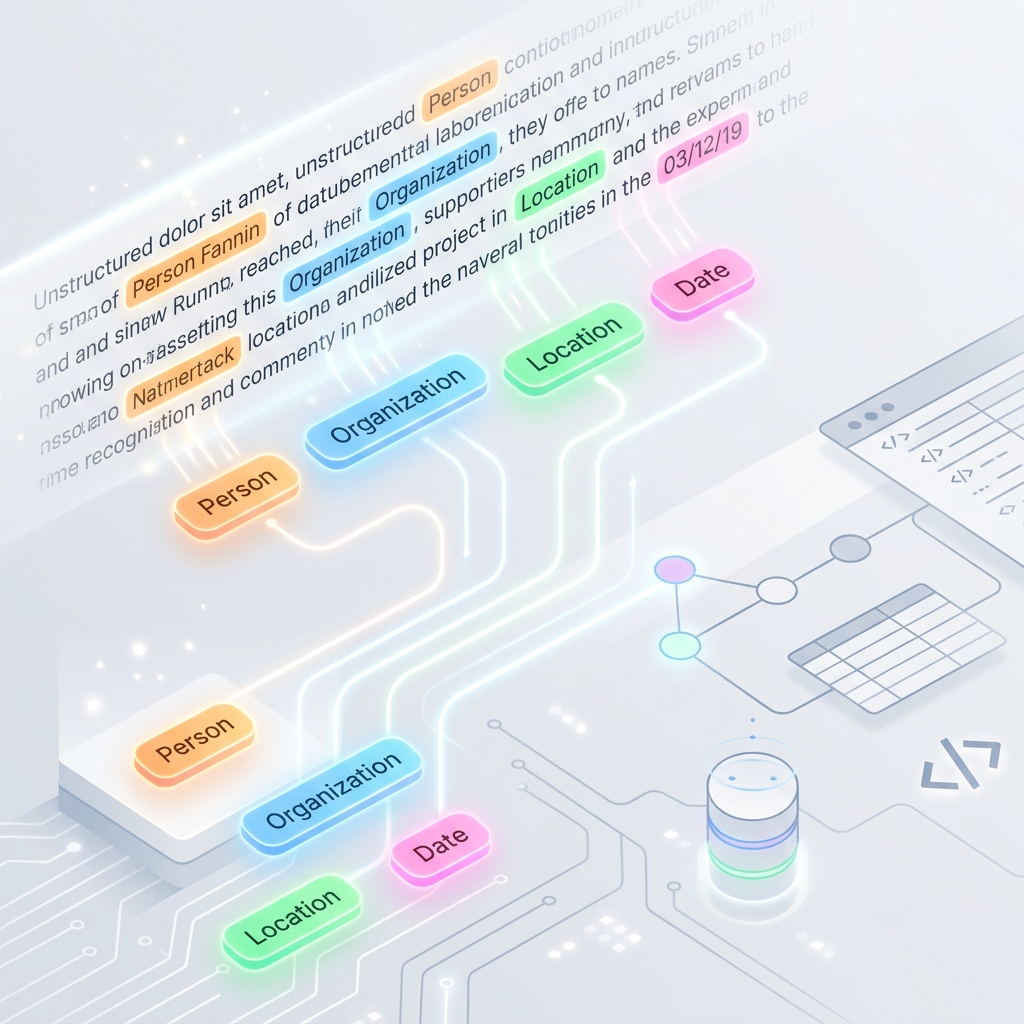
Named Entity Recognition (NER): From Classical NLP to AI-Powered Extraction

Named Entity Recognition (NER): From Classical NLP to AI-Powered Extraction

Named Entity Recognition (NER) is a cornerstone of Natural Language Processing (NLP). It is the process of automatically identifying and classifying key elements in unstructured text into predefined categories—such as names of people, organizations, locations, dates, monetary values, and product names. Without NER, search engines, recommendation engines, and automated document analysis systems would struggle to understand who, what, where, and when within text.
AI NER NLP Machine Learning Large Language Models
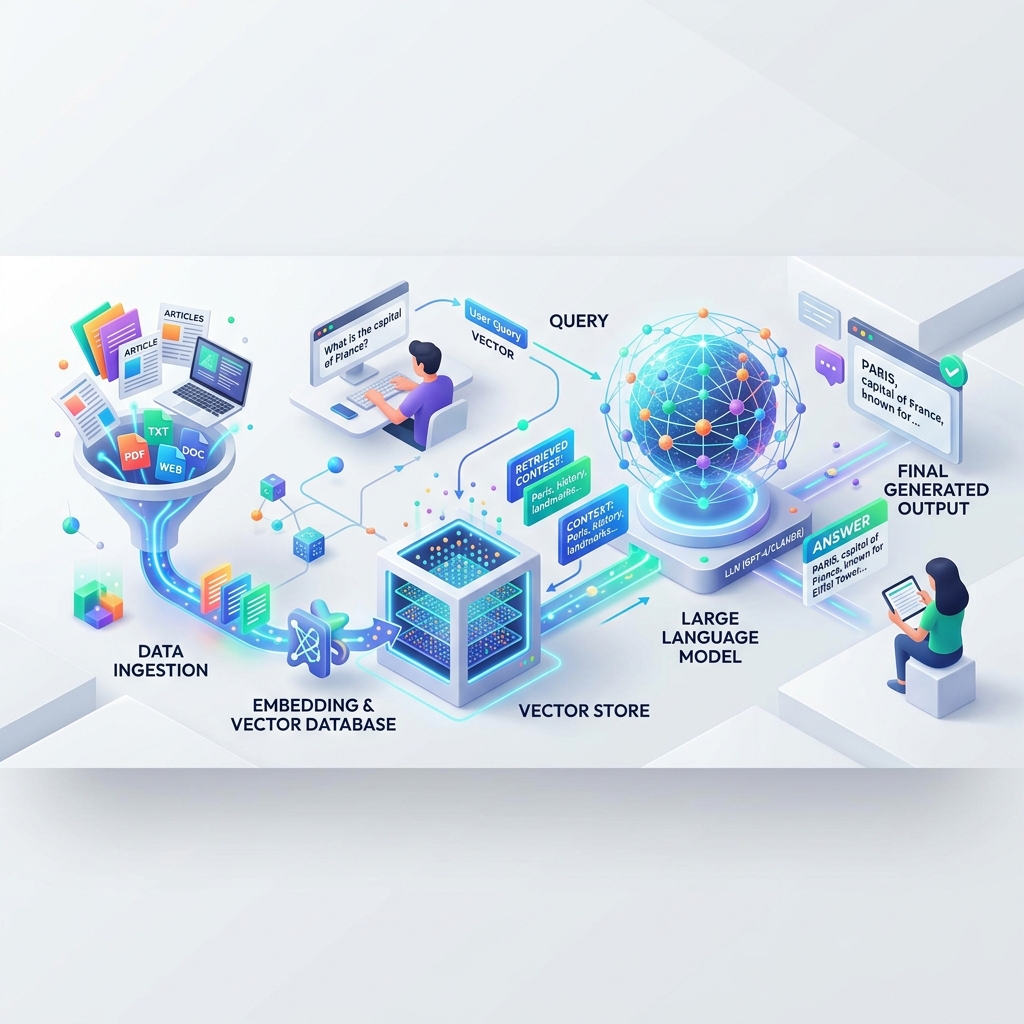
Understanding RAG Models: Grounding LLMs with Real-World Knowledge

Understanding RAG Models: Grounding LLMs with Real-World Knowledge

Large Language Models (LLMs) like GPT-4 or Gemini are incredibly powerful, but they have a few critical weaknesses: they hallucinate, they don’t know about information after their training cutoff date, and they lack access to your private domain data. To solve these limitations, developers use Retrieval-Augmented Generation (RAG). RAG is a framework that retrieves relevant information from an external database and provides it to the LLM to generate accurate, context-aware responses.
AI RAG Models LLMs Vector Database Machine Learning
AI and Blockchain: The Future of Secure Intelligent Systems

AI and Blockchain: The Future of Secure Intelligent Systems

In the technology landscape of 2026, two massive forces are beginning to converge: Artificial Intelligence (AI) and Blockchain. While AI provides the “brain” for intelligent automation, Blockchain provides the “spine” for decentralized trust and security. Together, they are creating a new generation of secure, intelligent systems that are transformative across every industry. Here is how the synergy of AI and Blockchain is shaping the future.
AI Blockchain Decentralized AI Smart Contracts Web3 Tech Trends 2026
How Computer Vision Works: From Pixels to Real-World Intelligence

How Computer Vision Works: From Pixels to Real-World Intelligence

In the digital era of 2026, Computer Vision (CV) has become one of the most transformative branches of Artificial Intelligence. It is the science that allows computers to “see” and interpret the visual world just as humans do—if not better. From the facial recognition on your smartphone to the autonomous drones delivering packages, CV is everywhere. But how does a machine actually translate a grid of numbers into a recognized object?
Computer Vision AI Machine Learning Deep Learning Image Recognition Tech Trends 2026
AI and Modern Software Development: The Great Transformation

AI and Modern Software Development: The Great Transformation

The landscape of software development is undergoing a seismic shift. Gone are the days when coding was a purely manual, line-by-line endeavor. Today, Artificial Intelligence is not just a tool; it’s a collaborator that is redefining how we conceive, build, and maintain software. In this post, we explore how AI is transforming the modern software development lifecycle and what it means for the developers of tomorrow.
AI Software Development Programming LLMs GitHub Copilot Cursor DevOps
LLM Reasoning: How AI Thinks, Solves, and Evolves

LLM Reasoning: How AI Thinks, Solves, and Evolves

Large Language Models (LLMs) have taken the world by storm, not just because they can generate human-like text, but because they appear to “reason” through complex problems. But how does a statistical model based on token prediction actually perform logical tasks? In this post, we explore the mechanics of LLM reasoning, from basic pattern matching to advanced strategies like Chain of Thought (CoT).
AI LLM Reasoning Machine Learning Chain of Thought Technology
Federated Learning: Training AI Without Sharing Your Data

Federated Learning: Training AI Without Sharing Your Data

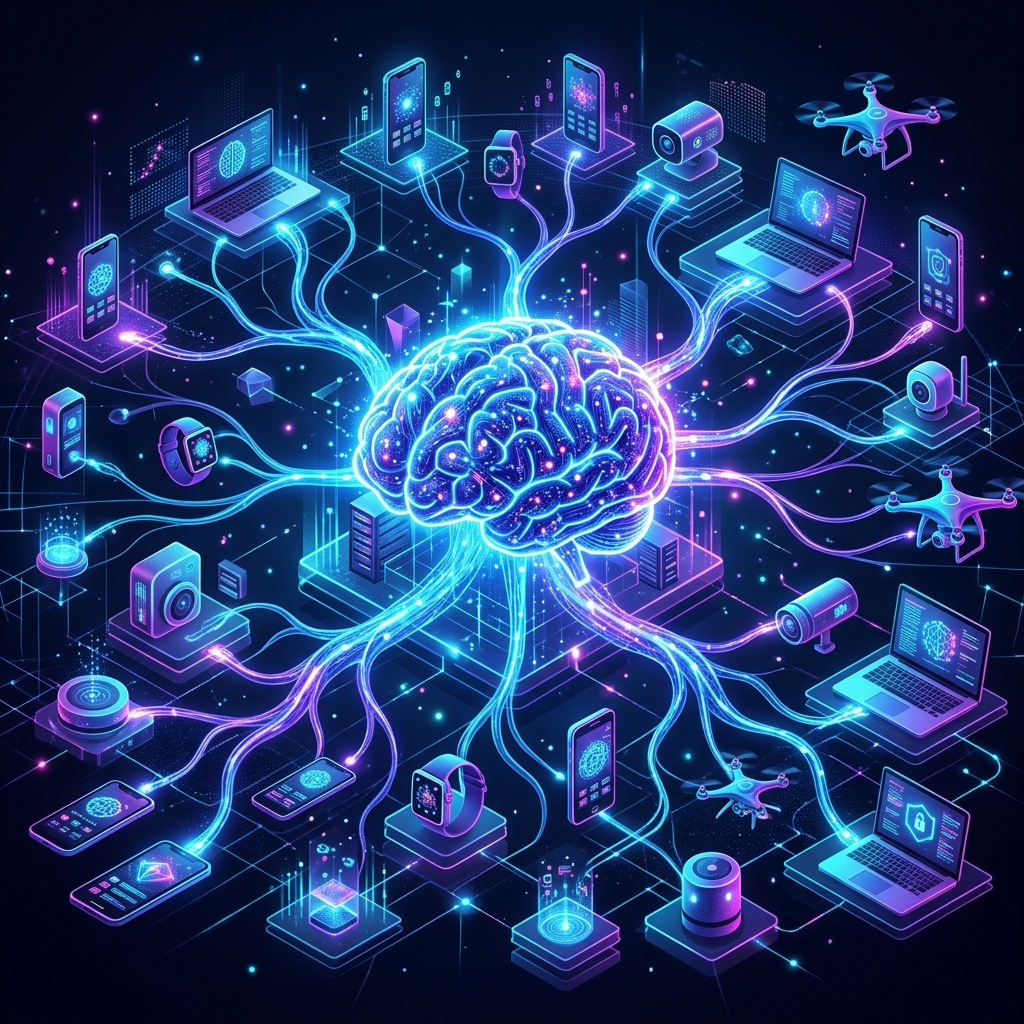
In the traditional machine learning pipeline, data collection is the first and often most expensive step. To train a model, you must gather raw user data—photos, text messages, health records, or financial transactions—and upload it to a centralized cloud server. While this centralized approach has powered the AI revolution, it faces major challenges: Privacy Concerns: Users are increasingly reluctant to upload private data to third-party servers. Data Regulation: Regulations like GDPR and HIPAA strictly restrict how personal data can be transferred and stored. Bandwidth Costs: Uploading gigabytes of raw data from millions of edge devices (like smartphones) is highly inefficient. Federated Learning (FL) solves these issues by turning the traditional paradigm on its head. Instead of bringing the data to the model, it brings the model to the data.
Machine Learning Privacy AI Distributed Computing Data Security
The Future of Software Development: AI, Automation, and Ghaznix

The Future of Software Development: AI, Automation, and Ghaznix

The landscape of software development is shifting beneath our feet. We’ve moved from writing machine code to high-level abstractions, and now, we are entering the era of Intelligent Automation. As developers, our value is no longer measured by how many lines of boilerplate code we can churn out, but by how effectively we can architect systems and solve complex problems using the best tools at our disposal.
software development AI automation dev-tools json future of tech