LLM Reasoning: How AI Thinks, Solves, and Evolves
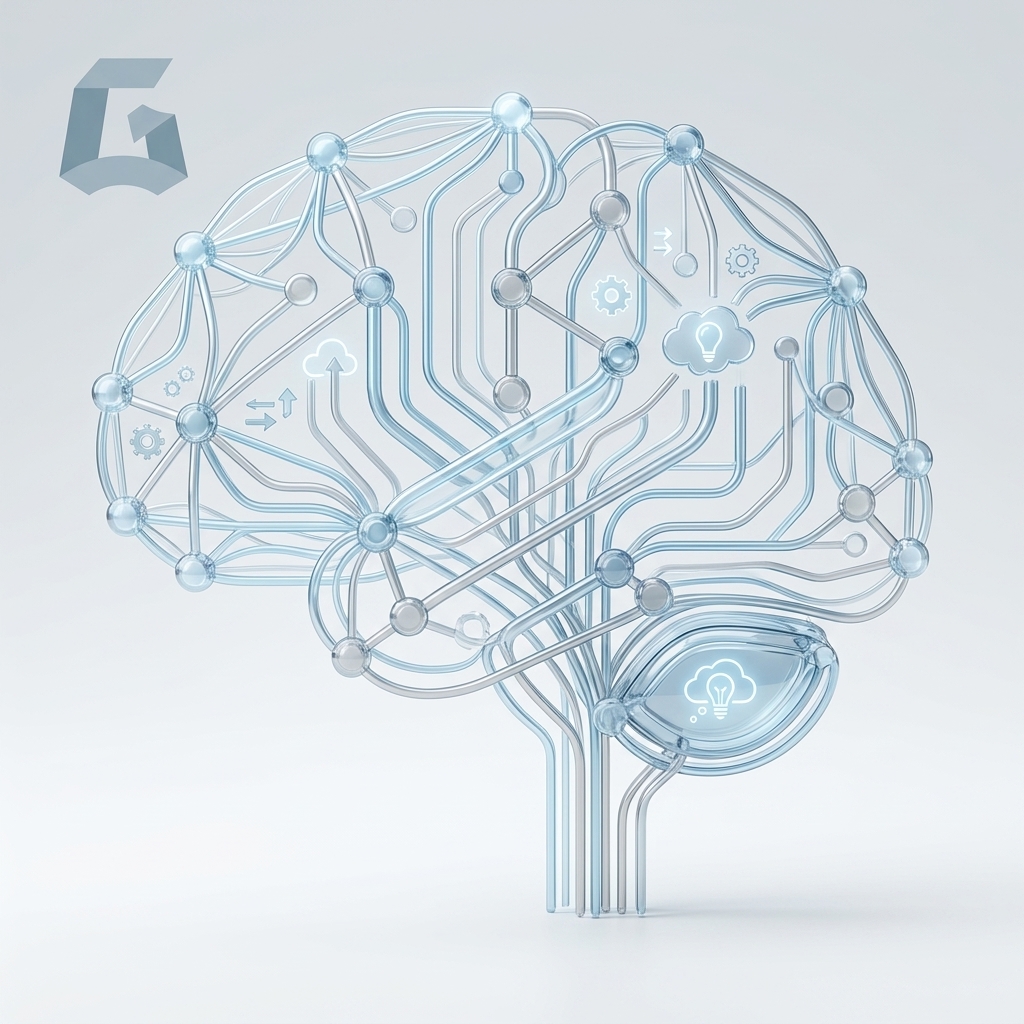
Large Language Models (LLMs) have taken the world by storm, not just because they can generate human-like text, but because they appear to “reason” through complex problems. But how does a statistical model based on token prediction actually perform logical tasks?
In this post, we explore the mechanics of LLM reasoning, from basic pattern matching to advanced strategies like Chain of Thought (CoT).
1. Is it Truly Reasoning or Just Prediction?
At their core, LLMs are trained to predict the next token in a sequence. However, as these models grew in size (parameters), emergent properties began to appear. Researchers found that models could solve math problems, write code, and follow complex instructions—tasks that require more than just memorization.
This is often described as “Emergent Reasoning.” While the model doesn’t “think” like a human, its internal representation of language contains enough logical structure to simulate reasoning steps.
2. The Breakthrough: Chain of Thought (CoT)
One of the most significant advancements in LLM reasoning is Chain of Thought (CoT) prompting. Instead of asking for a final answer, CoT encourages the model to generate intermediate steps.
How CoT Works:
- Step-by-Step Logic: The model breaks down a complex problem into smaller, manageable pieces.
- Memory Buffer: The intermediate steps act as a working memory, allowing the model to “refer back” to its own previous logic.
- Verification: By showing its work, the model is less likely to make “leap-of-logic” errors.
3. System 1 vs. System 2 Thinking
Psychologist Daniel Kahneman famously described two systems of human thought:
- System 1: Fast, instinctive, and emotional (e.g., recognizing a face).
- System 2: Slower, more deliberative, and logical (e.g., solving a math equation).
Most LLMs primarily operate in a “System 1” mode—they generate text quickly based on probability. Current research is focused on moving AI toward System 2 thinking, where the model pauses, reflects, and verifies its logic before outputting a final answer.
4. Current Limitations
Despite their impressive capabilities, LLMs still face significant hurdles in reasoning:
| Limitation | Description |
|---|---|
| Hallucinations | The model may confidently state a logical fallacy or false fact as truth. |
| Lack of Grounding | LLMs don’t have a physical understanding of the world; their logic is purely linguistic. |
| Compute Cost | Deep reasoning (searching through many possible logical paths) requires massive computational power. |
5. The Future of AI Reasoning
The next generation of AI models (like OpenAI’s o1 or Google’s Gemini specialized reasoning models) are integrating search algorithms (like Monte Carlo Tree Search) with neural networks. This allows the model to “think before it speaks,” exploring thousands of potential reasoning paths to find the most accurate one.
Key Takeaways:
- LLM reasoning is an emergent property of large-scale training.
- Chain of Thought is essential for solving multi-step problems.
- The future lies in combining neural intuition with symbolic logic.
Summary
We are moving from a world where AI simply “knows” things to a world where AI can “figure things out.” LLM reasoning is the bridge that will take us from simple chatbots to true digital assistants capable of solving humanity’s most complex challenges.
Empower Your Digital Presence & Workflows
Explore top-tier tools built by Ghaznix to streamline your links, surveys, and brand growth.