AI and Modern Software Development: The Great Transformation
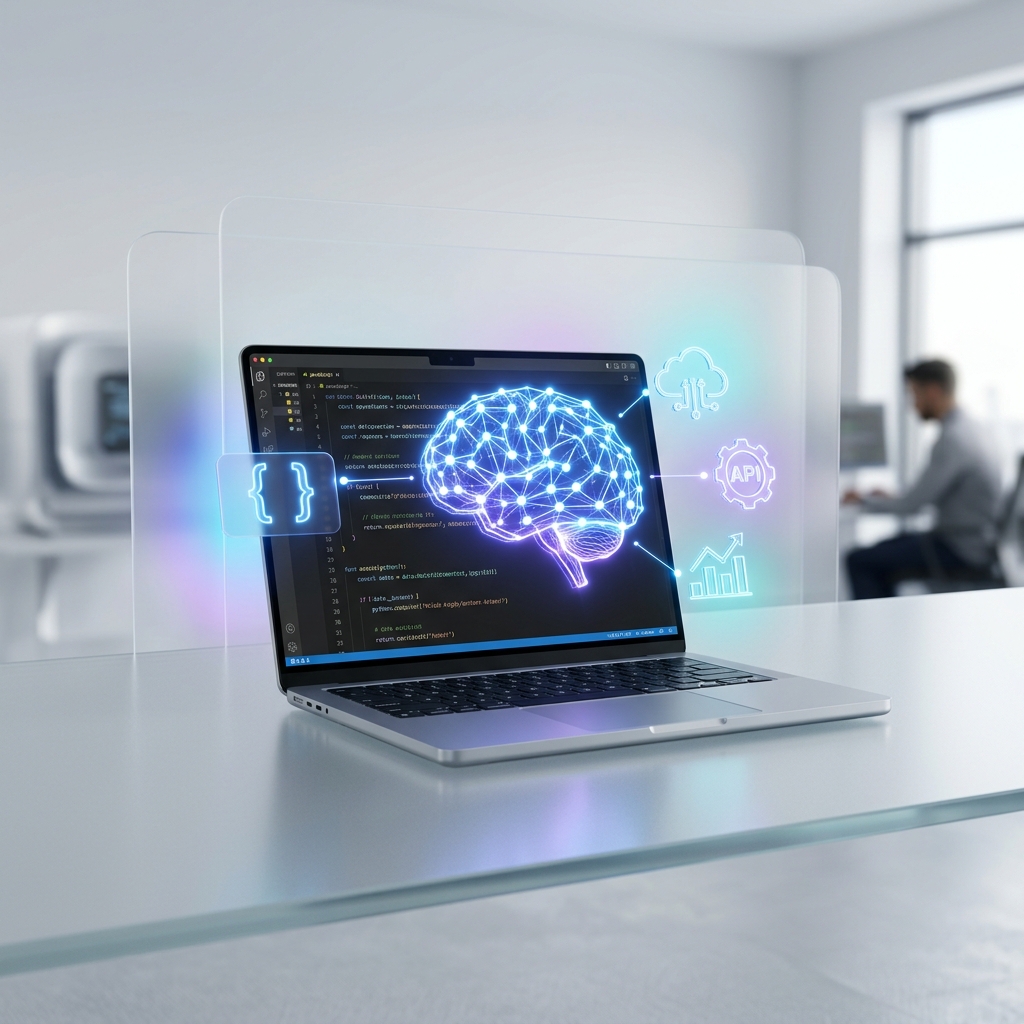
The landscape of software development is undergoing a seismic shift. Gone are the days when coding was a purely manual, line-by-line endeavor. Today, Artificial Intelligence is not just a tool; it’s a collaborator that is redefining how we conceive, build, and maintain software.
In this post, we explore how AI is transforming the modern software development lifecycle and what it means for the developers of tomorrow.
1. The Rise of AI Coding Assistants
Tools like GitHub Copilot, Cursor, and Tabnine have moved from being simple autocomplete plugins to powerful pair programmers. These assistants can:
- Generate Boilerplate: Instantly creating repetitive code structures, saving hours of manual labor.
- Refactor Code: Suggesting more efficient or readable ways to write existing logic.
- Explain Complex Snippets: Helping developers understand legacy codebases or unfamiliar libraries.
By reducing the “cognitive load” of syntax and repetitive tasks, AI allows engineers to focus on high-level architecture and problem-solving.
2. Automated Testing and Debugging
One of the most time-consuming parts of development is finding and fixing bugs. AI is revolutionizing this space by:
- Predictive Debugging: Identifying potential vulnerabilities or logic errors before the code is even run.
- Automated Test Generation: Creating comprehensive unit tests and edge-case scenarios based on the function’s intent.
- Self-Healing Code: Some advanced systems can now suggest (and even apply) fixes for failing CI/CD pipelines automatically.
3. AI-Driven DevOps and CI/CD
Beyond the IDE, AI is making its mark on the infrastructure level. Modern DevOps teams are using AI for:
| Feature | Impact |
|---|---|
| Log Analysis | Detecting anomalies in server logs faster than any human could. |
| Resource Optimization | Dynamically adjusting cloud compute resources based on predicted traffic patterns. |
| Security Scanning | Identifying security flaws in dependencies and infrastructure-as-code (IaC) templates. |
4. The Changing Role of the Software Engineer
As AI takes over more of the “writing,” the role of the software engineer is evolving into that of a Solution Architect or AI Orchestrator.
The key skills for the future are:
- System Design: Understanding how different components fit together at scale.
- Prompt Engineering: Learning how to effectively communicate requirements to AI models.
- Code Review & Verification: Ensuring that AI-generated code meets security, performance, and ethical standards.
Conclusion: Embracing the AI-Augmented Future
AI is not here to replace developers; it’s here to empower them. By automating the mundane and enhancing our problem-solving capabilities, AI is making software development faster, more accessible, and more creative than ever before.
At Ghaznix, we are at the forefront of this revolution, integrating AI into our workflows to build better tools for you. The future of software is not just written by humans—it’s co-authored with AI.
Summary
The integration of AI into software development is not a trend; it’s a fundamental shift. From coding assistants to automated DevOps, AI is enabling developers to build more complex systems with higher quality and speed. The developers who thrive in this new era will be those who learn to harness AI as their most powerful ally.
Empower Your Digital Presence & Workflows
Explore top-tier tools built by Ghaznix to streamline your links, surveys, and brand growth.