🔥 FREE PRO OFFER OnlyLink.click Pro Version is 100% Free of Cost till 31 December, 2026! Claim Free Pro

System Design

Choreography vs. Orchestration: Designing Distributed Workflows in Microservices

Choreography vs. Orchestration: Designing Distributed Workflows in Microservices

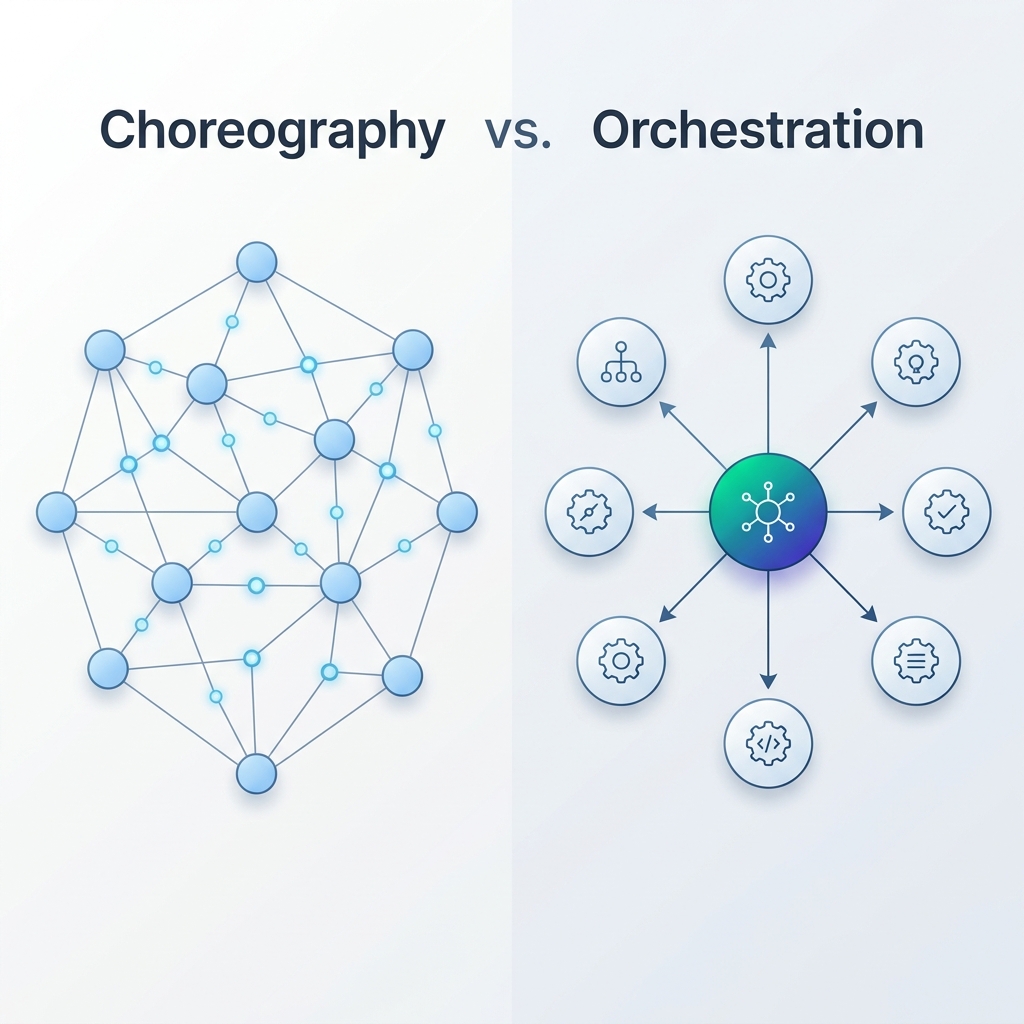
In a monolithic architecture, executing a complex business transaction—such as fulfilling an e-commerce order—is straightforward. All data resides in a single relational database, allowing developers to wrap multiple database writes across inventory, payments, and shipping inside a single ACID transaction. If an error occurs at any point, a SQL ROLLBACK instantly restores system consistency. However, modern cloud-native systems adopt a Microservices Architecture, where each service owns its data and exposes distinct API boundaries. In this distributed paradigm, a single end-to-end business operation spans multiple independent microservices and database engines.
Microservices Choreography Orchestration System Design Distributed Systems Saga Pattern Event-Driven Architecture Software Architecture
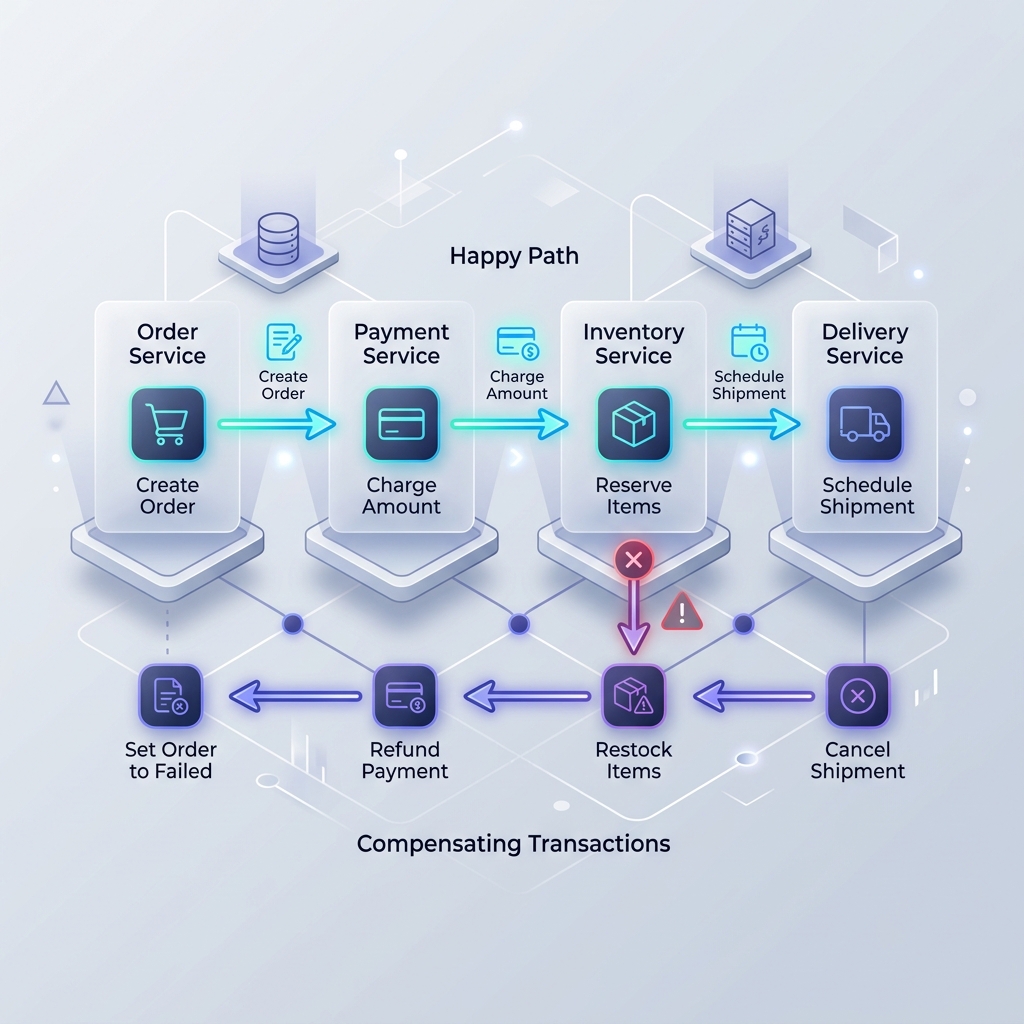
The Saga Pattern: Distributed Transactions in Microservices Architecture

The Saga Pattern: Distributed Transactions in Microservices Architecture

In traditional monolithic applications, maintaining data consistency across multiple entities is straightforward. Relational database engines provide ACID (Atomicity, Consistency, Isolation, Durability) guarantees wrapped inside local SQL transactions. If an order placement, payment deduction, or inventory reserve fails halfway through, calling ROLLBACK reverts every database modification instantaneously. However, when migrating to a modern Microservices Architecture, data management shifts fundamentally. To ensure domain autonomy and independent scalability, each microservice owns its private database. A single business operation—such as processing an e-commerce checkout—now spans multiple service boundaries and database engines (e.g., PostgreSQL for Orders, DynamoDB for Payments, Redis for Inventory).
Microservices Saga Pattern Distributed Transactions Event-Driven Architecture Kafka Orchestration Choreography System Design
The Transactional Outbox Pattern: Reliable Event Publishing in Microservices

The Transactional Outbox Pattern: Reliable Event Publishing in Microservices

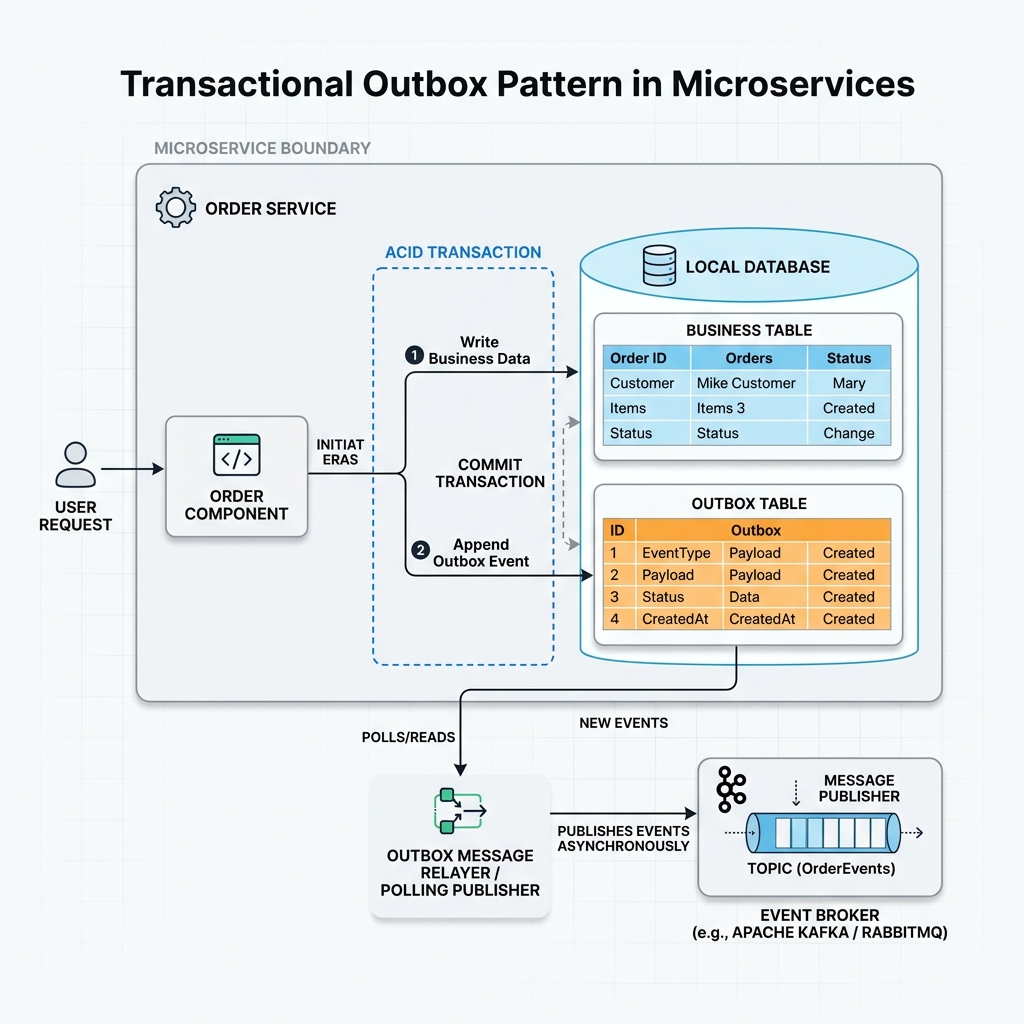
In modern distributed software engineering, Event-Driven Architecture (EDA) has become the backbone of scalable microservice systems. Services regularly emit domain events—such as OrderCreated, PaymentProcessed, or UserRegistered—to communicate state changes across service boundaries without tight coupling. However, implementing reliable event publishing in a microservices environment introduces a subtle yet catastrophic engineering problem: How do you guarantee that a database update and its corresponding event publication both succeed or both fail together?
Microservices Outbox Pattern Distributed Systems Kafka Debezium Event-Driven Architecture System Design
The Fallback Pattern: Designing Graceful Degradation in Microservices

The Fallback Pattern: Designing Graceful Degradation in Microservices

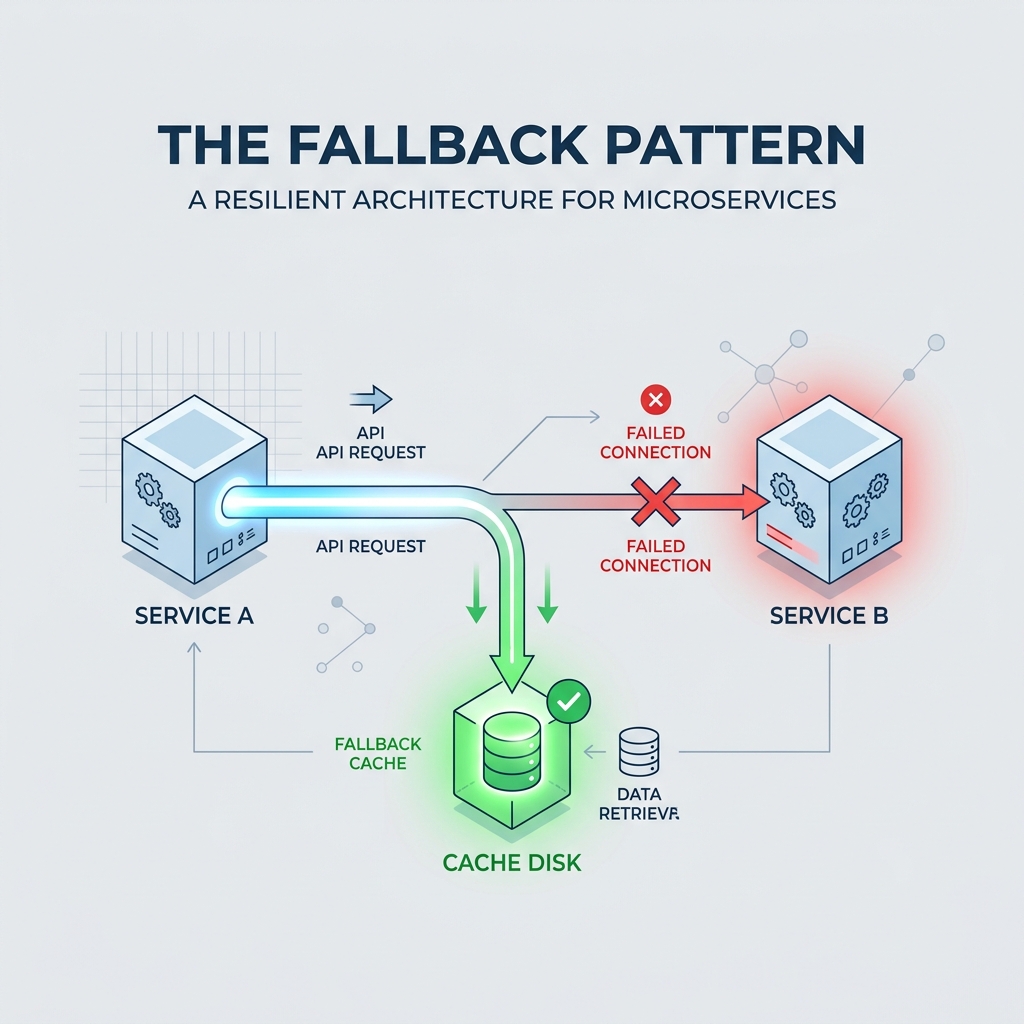
In a microservices architecture, services form a web of distributed network calls. While this allows teams to build and scale services independently, it also means that the overall reliability of your system is only as strong as its weakest link. If a critical service goes down or becomes unresponsive, it can trigger a cascading failure that disrupts the entire application.
Microservices Fallback Pattern Software Architecture System Design Fault Tolerance Resilience
The Retry Pattern: Building Resilient Microservices

The Retry Pattern: Building Resilient Microservices

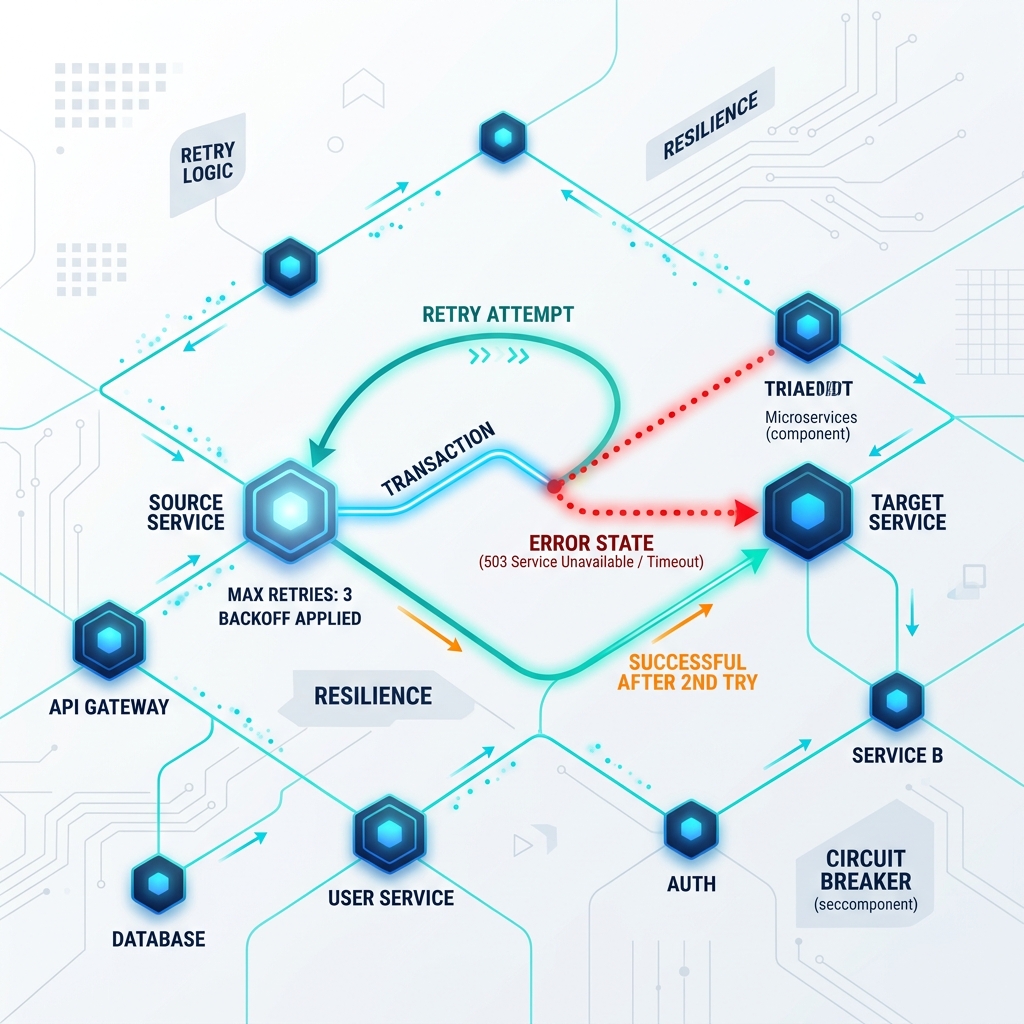
In a microservices architecture, services communicate over a network rather than in-memory calls. While this decoupling enables massive horizontal scaling and independent deployments, it also introduces a major vulnerability: the network is unreliable. At any moment, a downstream service might experience a brief network glitch, a temporary CPU spike, a quick database lock contention, or a rolling update restart. These temporary failures are known as transient faults.
Microservices Retry Pattern Software Architecture System Design Fault Tolerance Resilience
The Bulkhead Pattern: Designing Fault-Tolerant Microservices

The Bulkhead Pattern: Designing Fault-Tolerant Microservices

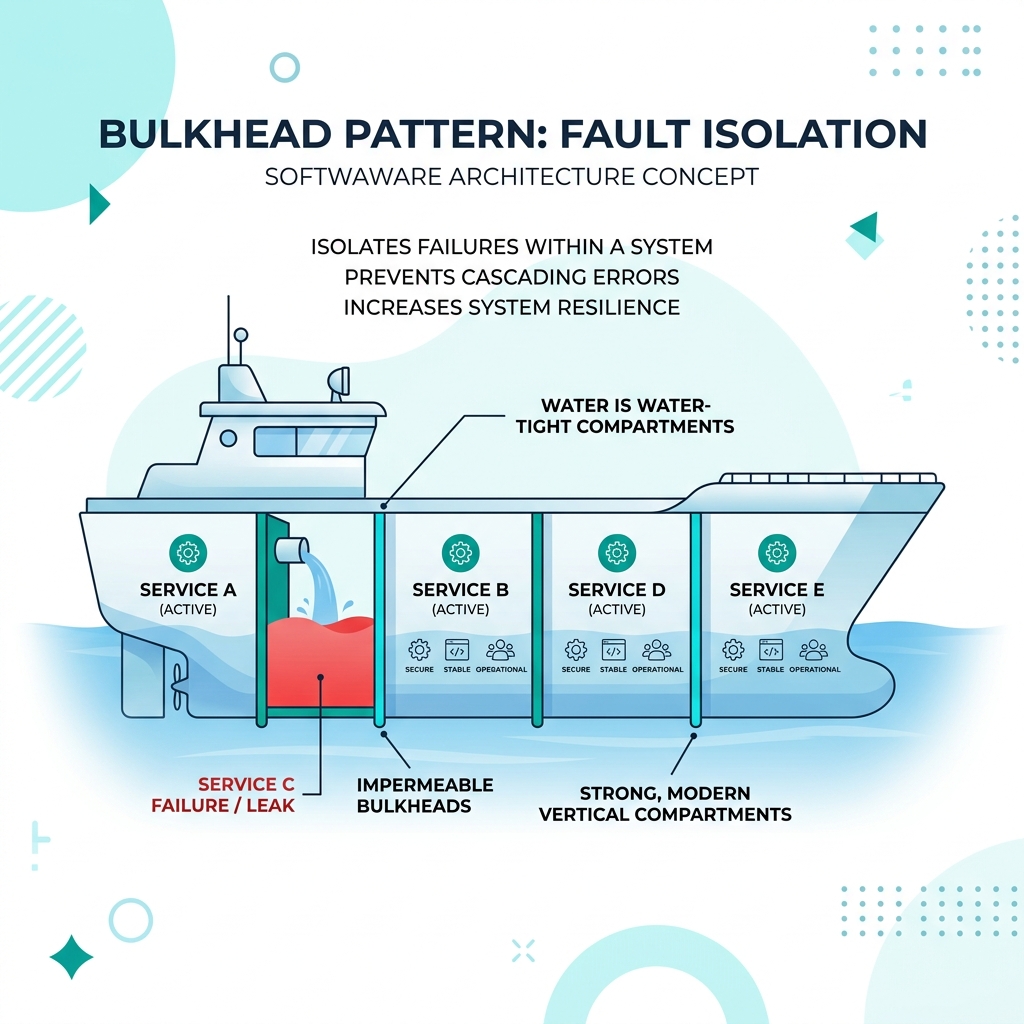
In a microservices architecture, a single application is broken down into dozens or hundreds of independent, collaborating services. While this design improves modularity and scalability, it also introduces a major risk: a failure in one service can cascade and bring down the entire system. If a downstream service becomes sluggish or unresponsive, incoming requests to your upstream services will start to pile up. If they all share the same memory, CPU, or thread pool, a slow dependency can quickly exhaust all available resources, causing your entire application to crash.
Microservices Bulkhead Pattern Software Architecture System Design Fault Tolerance Resilience
The Sidecar Pattern: Extending Microservices Without Modifying Code

The Sidecar Pattern: Extending Microservices Without Modifying Code

In modern cloud-native systems, microservices are expected to do much more than run business logic. They must handle logging, manage SSL/TLS certificates, collect metrics, implement retry mechanisms, and coordinate secure communications with other services. If we embed all of this cross-cutting functionality directly inside each application’s codebase, we end up with code bloat, tight coupling, and language lock-in.
Microservices Sidecar Pattern Software Architecture System Design Kubernetes DevOps
The Strangler Fig Pattern: A Safe Way to Migrate Monolithic Applications

The Strangler Fig Pattern: A Safe Way to Migrate Monolithic Applications

In modern software engineering, legacy monolithic applications are a common challenge. Over time, a successful codebase grows so large and interconnected that making simple changes becomes risky, deployments take hours, and scaling individual features is virtually impossible. When teams decide to modernize their systems by migrating to microservices, they face a high-stakes question: How do we rewrite the system without breaking our current business?
Software Architecture Microservices Monolith Migration System Design Strangler Fig API Routing Refactoring
Understanding the Backend for Frontend (BFF) Pattern: A Simple Guide

Understanding the Backend for Frontend (BFF) Pattern: A Simple Guide

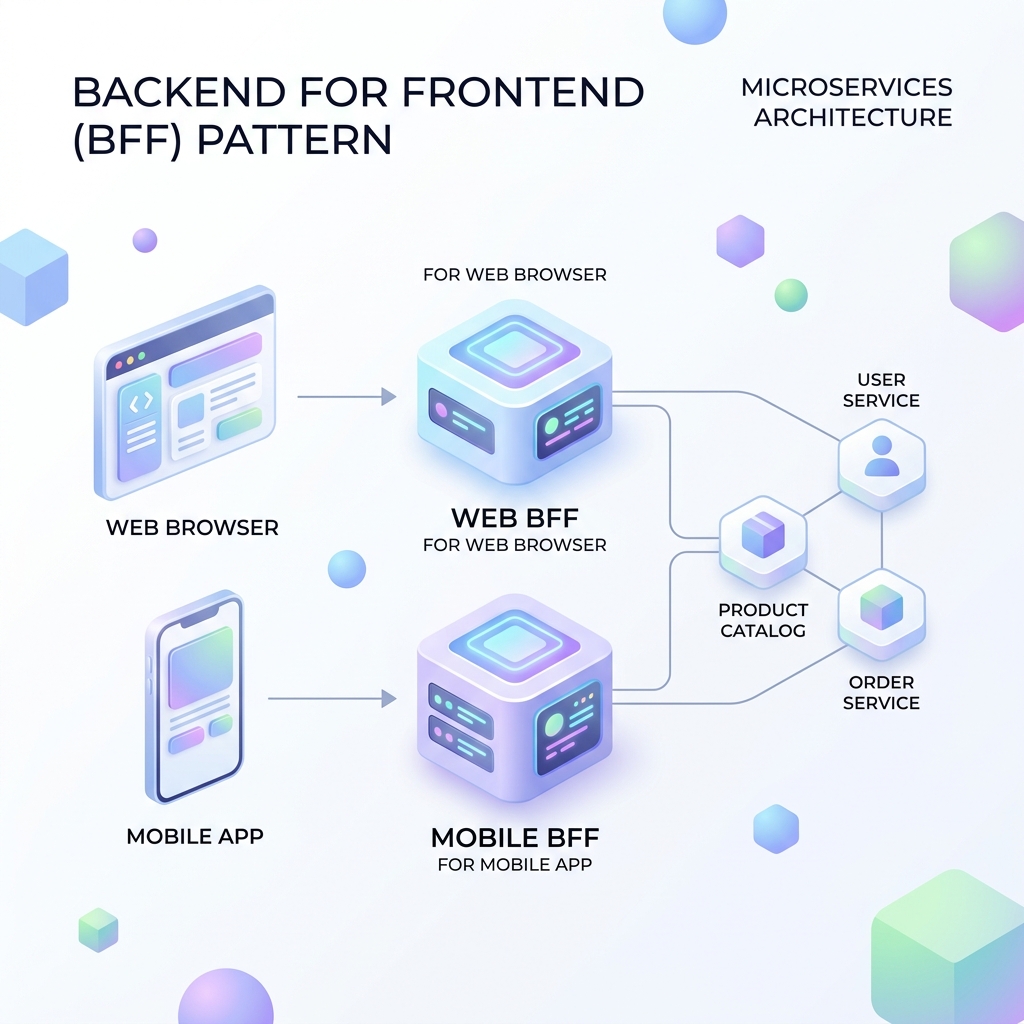
In a microservices architecture, our systems are broken down into dozens of small, focused services—like a User Service, an Order Service, and a Product Service. But when it comes to displaying this information to your users, different devices have very different needs. A web browser on a high-speed desktop computer wants a rich dashboard full of tables, sidebars, and graphs. A mobile app on a slow cellular network wants a simple, lightweight layout to save bandwidth and battery. A smartwatch app might only need a single line of text.
Microservices BFF Pattern Backend for Frontend Software Architecture System Design Node.js
Understanding the API Gateway Pattern in Microservices: A Simple Guide

Understanding the API Gateway Pattern in Microservices: A Simple Guide

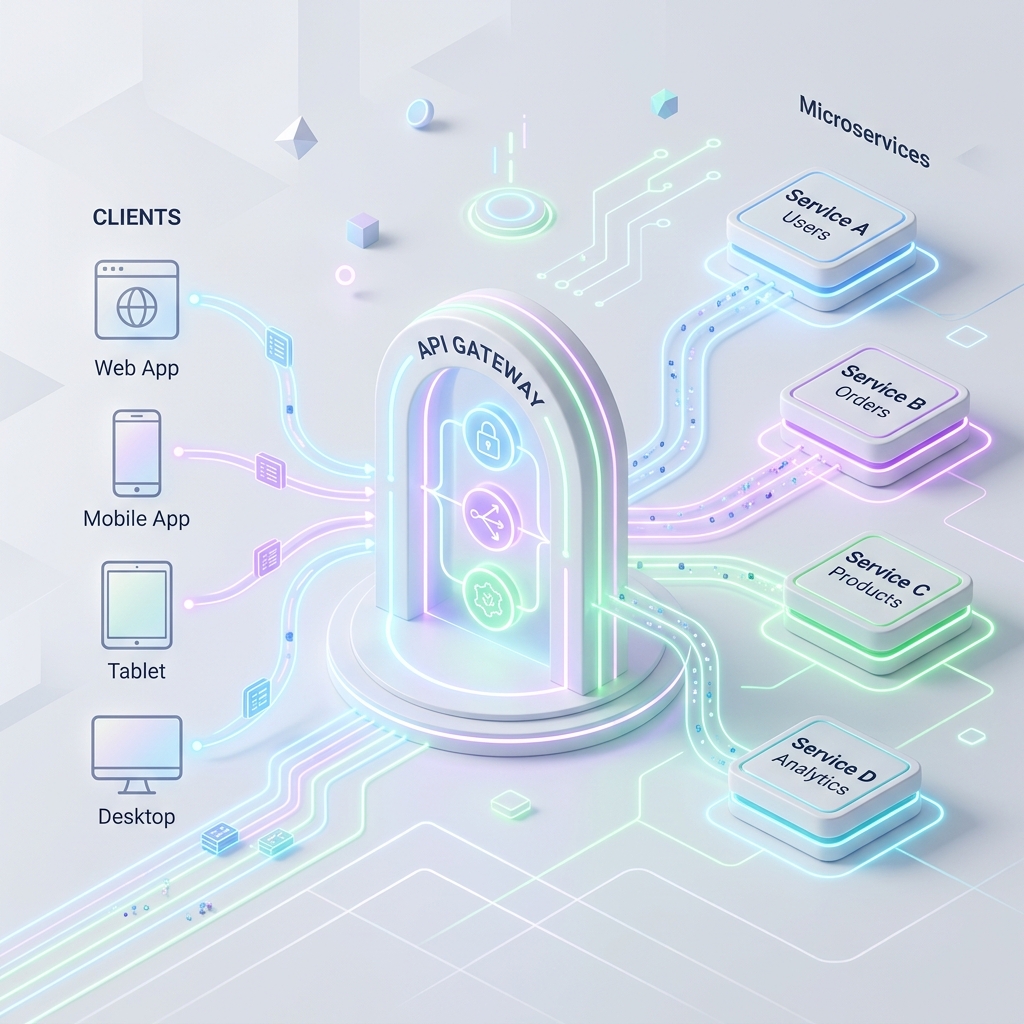
Transitioning from a single, monolithic application to a microservices architecture solves many problems. It allows teams to work independently, deploy services separately, and scale parts of the system as needed. However, it also introduces a new challenge: how do clients interact with all these independent services? If you have ten, fifty, or hundreds of tiny microservices, should a mobile app or web page connect to each one of them directly?
Microservices API Gateway Software Architecture System Design Routing Security
Domain-Driven Design (DDD) in Microservices

Domain-Driven Design (DDD) in Microservices

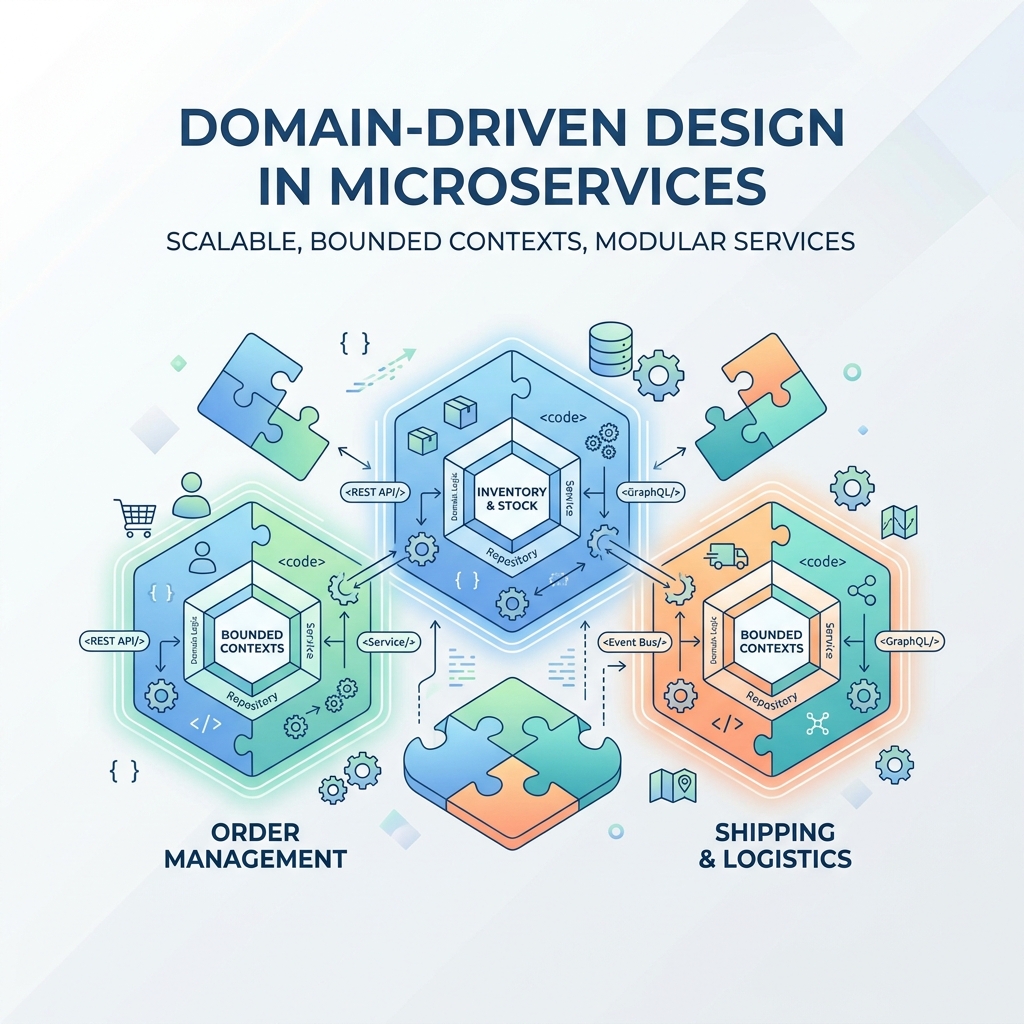
When organizations transition from a monolithic architecture to microservices, they face a critical, high-stakes question: How do we draw the boundaries of our services? In theory, microservices should be loose, decoupled units that can be developed, deployed, and scaled independently. In practice, however, many teams end up building a distributed monolith—a system where services are so tightly coupled that a single business change requires modifying and deploying multiple services simultaneously, compounding network latency and deployment gridlocks.
Microservices Domain-Driven Design DDD Software Architecture Bounded Context System Design