🔥 FREE PRO OFFER OnlyLink.click Pro Version is 100% Free of Cost till 31 December, 2026! Claim Free Pro

Deep Learning

Generative AI Explained: How Machines Learn to Create

Generative AI Explained: How Machines Learn to Create

Generative AI is one of the most transformative technological shifts of the 21st century. Unlike traditional AI systems that classify, predict, or detect, Generative AI creates — text, images, audio, video, code, and even three-dimensional structures. It is the technology behind ChatGPT writing articles, Midjourney painting photorealistic art, and GitHub Copilot completing entire functions from a comment.
AI Generative AI LLMs Deep Learning Machine Learning GPT Diffusion Models
How Gemini Transformer Model Works: GQA, SwiGLU, and Native Multimodality

How Gemini Transformer Model Works: GQA, SwiGLU, and Native Multimodality

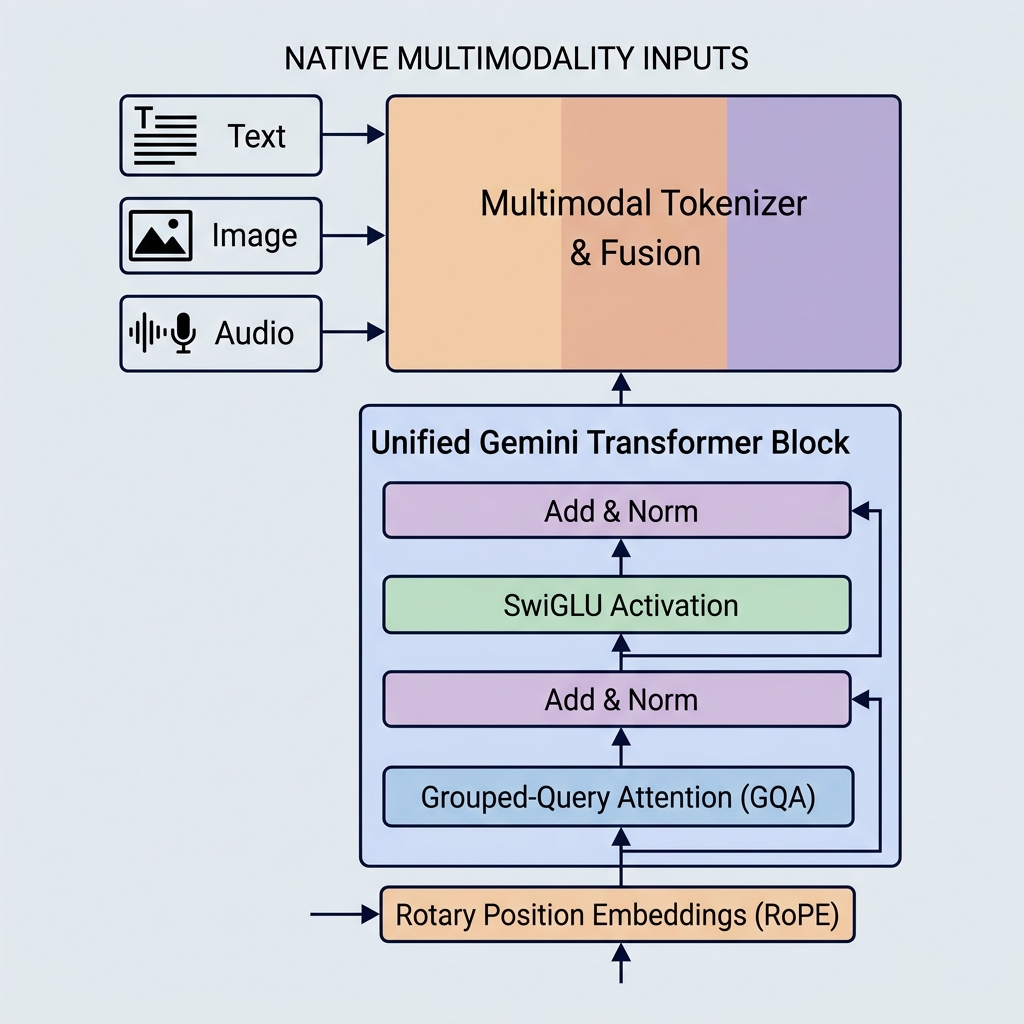
Google’s Gemini models have set new benchmarks in AI capability by introducing native multimodality, massive context windows, and key architectural optimizations. Unlike older models like GPT-3 or BERT, Gemini is built to handle multiple types of data from day one and utilizes highly efficient attention mechanisms.
Gemini Transformers GQA SwiGLU Multimodality Deep Learning
Why Transformers Replaced RNNs and LSTMs

Why Transformers Replaced RNNs and LSTMs

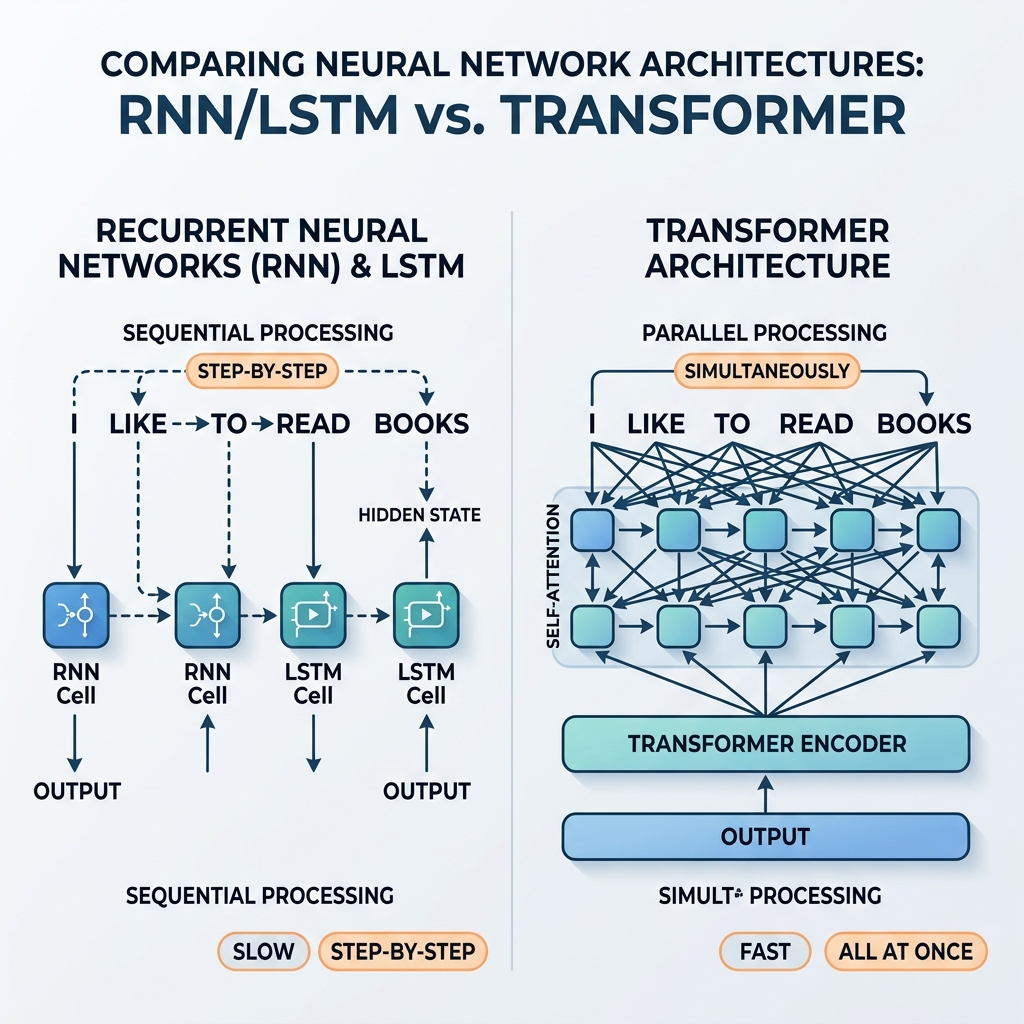
For years, Recurrent Neural Networks (RNNs) and Long Short-Term Memory (LSTM) networks were the undisputed champions of sequential data processing. They powered state-of-the-art translation systems, voice assistants, and text generation models. However, in 2017, the seminal paper “Attention Is All You Need” (Vaswani et al.) introduced the Transformer architecture. Within a few years, RNNs and LSTMs were almost entirely phased out of mainstream AI models.
Transformers RNN LSTM NLP Deep Learning
Understanding BERT: Bidirectional Encoder Representations from Transformers

Understanding BERT: Bidirectional Encoder Representations from Transformers

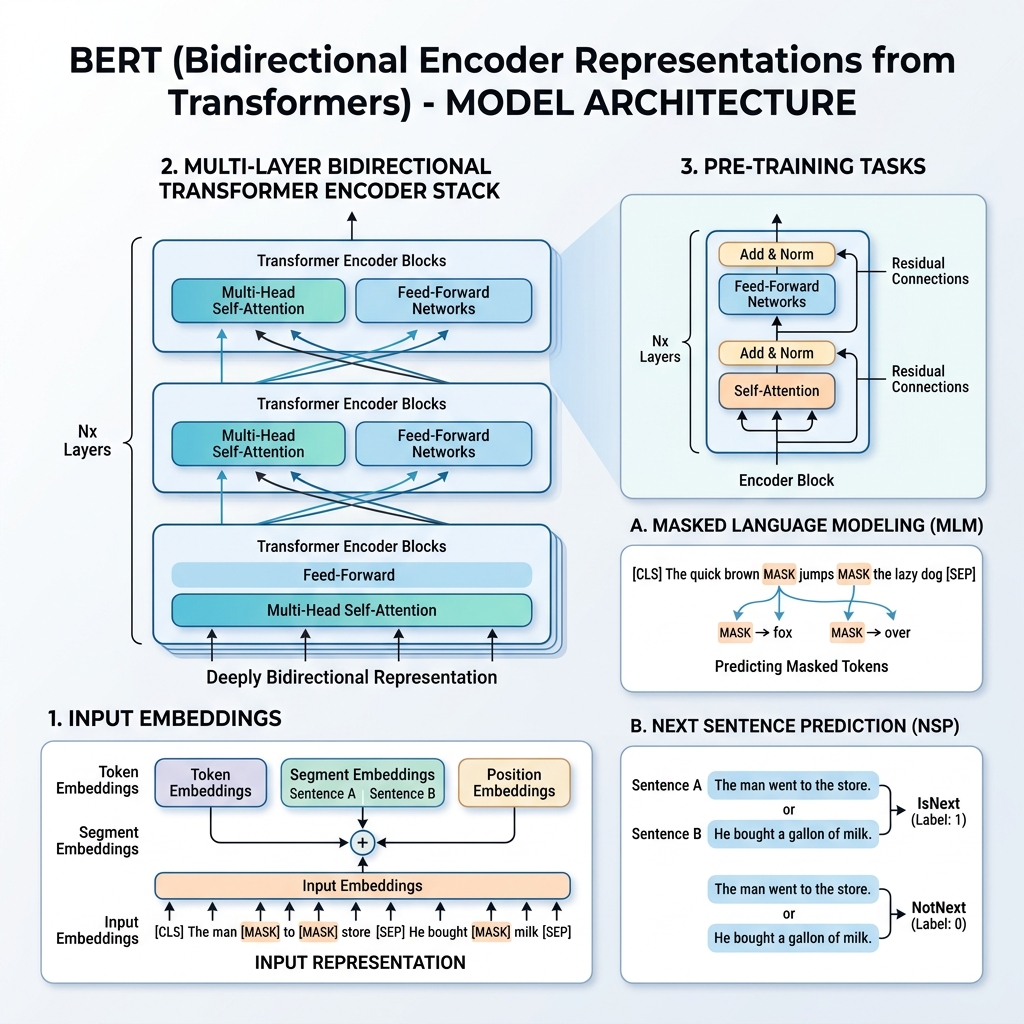
In 2018, Google researchers published a landmark paper titled “BERT: Pre-training of Deep Bidirectional Transformers for Language Understanding” (Devlin et al.). This research fundamentally shifted the field of Natural Language Processing (NLP). Before BERT, models processed text sequentially from left to right or right to left. BERT introduced a method to train language representations that look at the context from both directions simultaneously.
BERT Transformers NLP Deep Learning AI Architecture
Understanding Transformer Networks and the Self-Attention Mechanism

Understanding Transformer Networks and the Self-Attention Mechanism

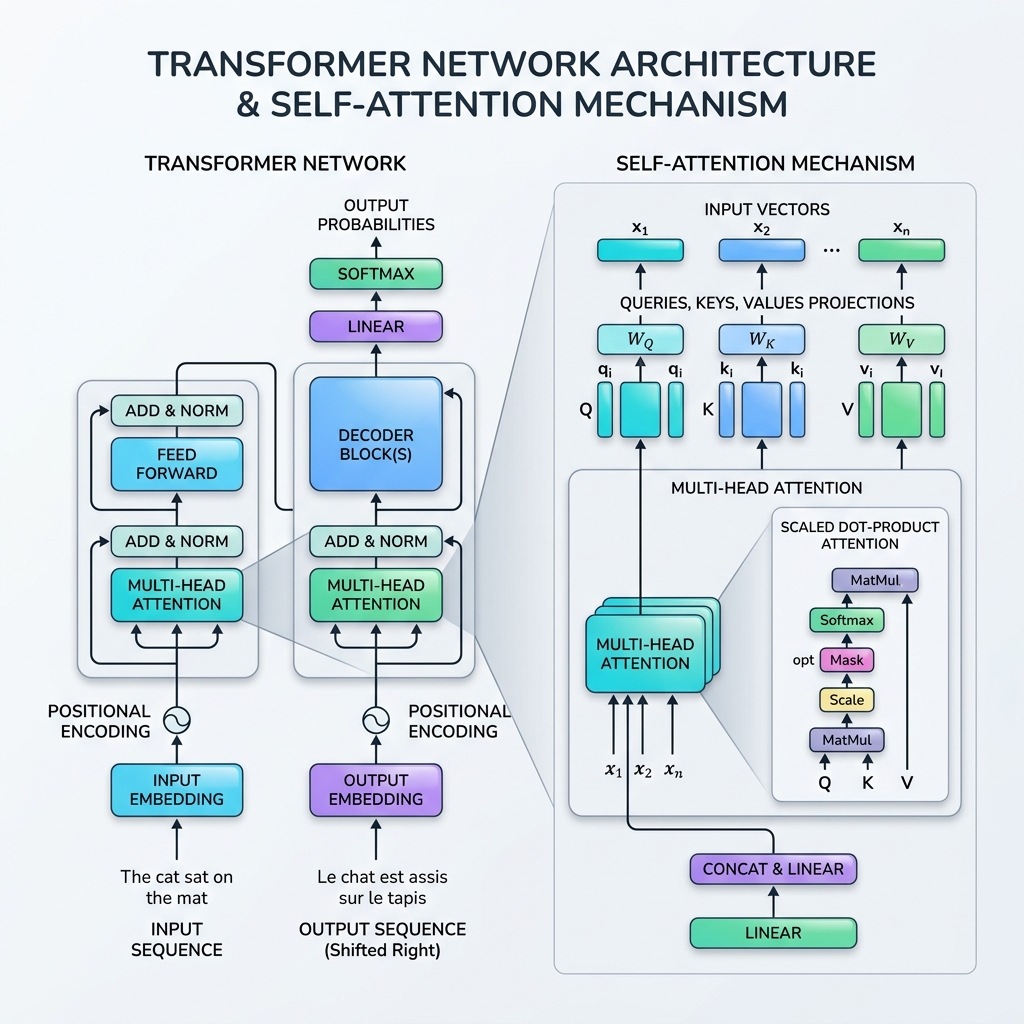
In 2017, the artificial intelligence landscape changed forever with the publication of the seminal paper “Attention Is All You Need” by Vaswani et al. The paper introduced the Transformer, a revolutionary neural network architecture that discarded recurrence (RNNs, LSTMs) entirely, opting instead to process sequential data in parallel using the Self-Attention Mechanism.
Transformer Self-Attention Deep Learning NLP AI Architecture
Demystifying Sequence-to-Sequence Architecture and the Attention Mechanism

Demystifying Sequence-to-Sequence Architecture and the Attention Mechanism

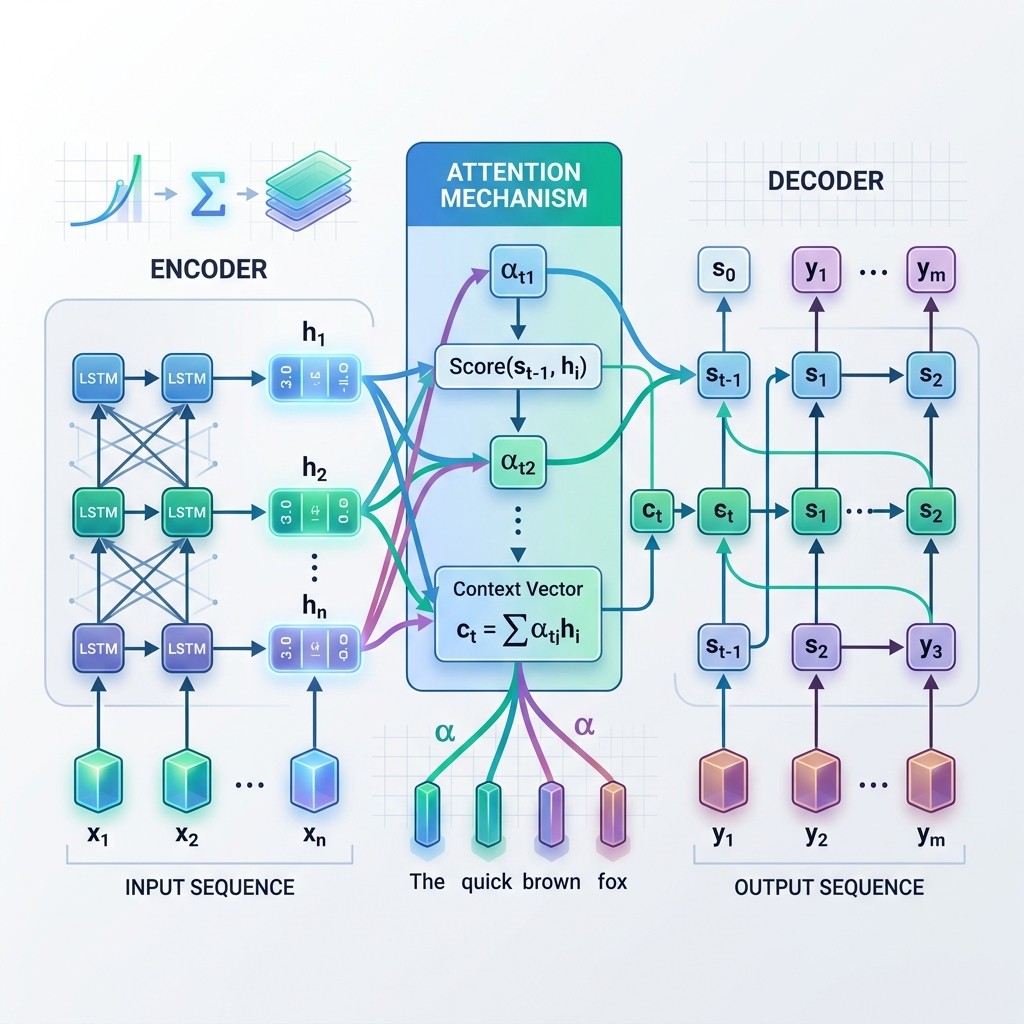
In the landscape of Natural Language Processing (NLP) and Artificial Intelligence, the ability to translate languages, summarize articles, and generate conversational responses has undergone a revolution. At the heart of this transformation lies the Sequence-to-Sequence (Seq2Seq) architecture and the pioneering Attention Mechanism. Before the advent of modern Transformers, these two innovations solved one of deep learning’s greatest challenges: mapping input sequences to output sequences when their lengths differ.
Seq2Seq Attention Mechanism Deep Learning NLP Artificial Intelligence
How Computer Vision Works: From Pixels to Real-World Intelligence

How Computer Vision Works: From Pixels to Real-World Intelligence

In the digital era of 2026, Computer Vision (CV) has become one of the most transformative branches of Artificial Intelligence. It is the science that allows computers to “see” and interpret the visual world just as humans do—if not better. From the facial recognition on your smartphone to the autonomous drones delivering packages, CV is everywhere. But how does a machine actually translate a grid of numbers into a recognized object?
Computer Vision AI Machine Learning Deep Learning Image Recognition Tech Trends 2026