🔥 FREE PRO OFFER OnlyLink.click Pro Version is 100% Free of Cost till 31 December, 2026! Claim Free Pro

Orchestration

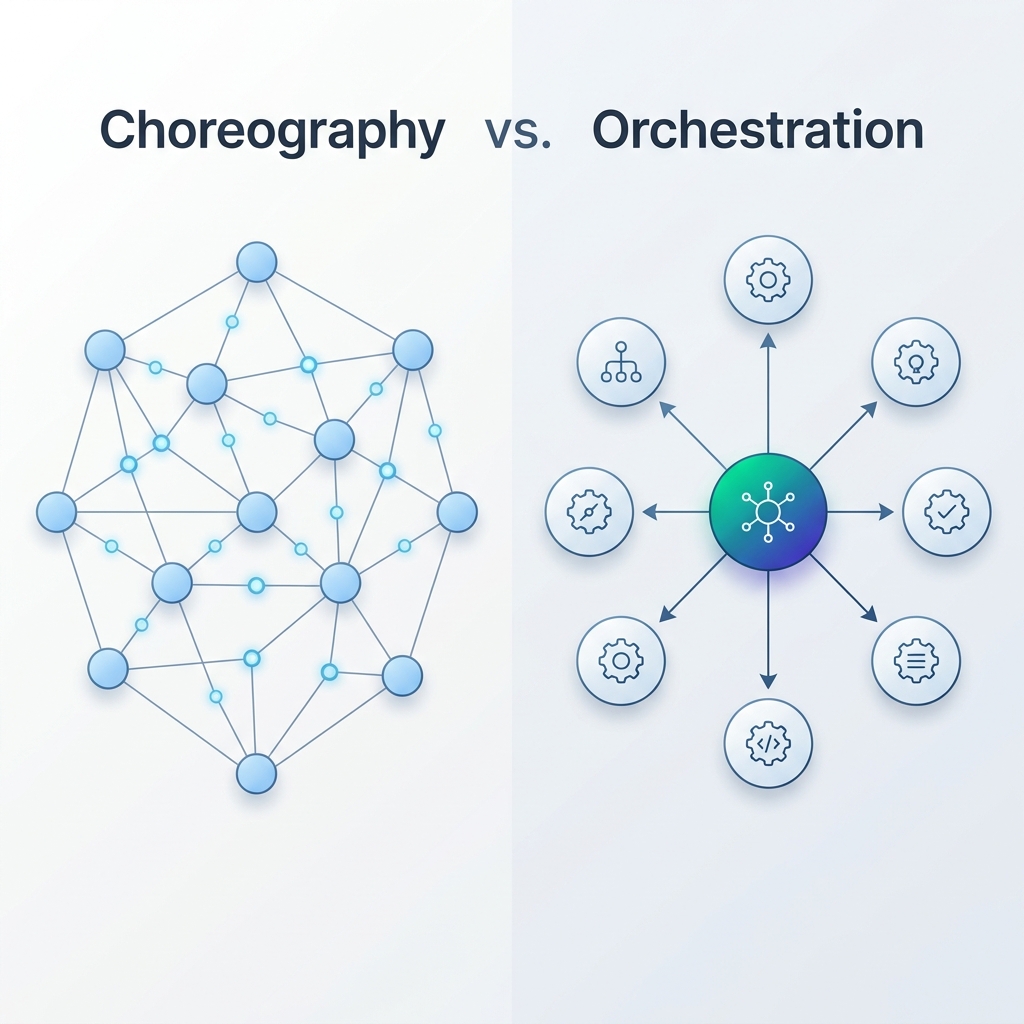
Choreography vs. Orchestration: Designing Distributed Workflows in Microservices

Choreography vs. Orchestration: Designing Distributed Workflows in Microservices

In a monolithic architecture, executing a complex business transaction—such as fulfilling an e-commerce order—is straightforward. All data resides in a single relational database, allowing developers to wrap multiple database writes across inventory, payments, and shipping inside a single ACID transaction. If an error occurs at any point, a SQL ROLLBACK instantly restores system consistency. However, modern cloud-native systems adopt a Microservices Architecture, where each service owns its data and exposes distinct API boundaries. In this distributed paradigm, a single end-to-end business operation spans multiple independent microservices and database engines.
Microservices Choreography Orchestration System Design Distributed Systems Saga Pattern Event-Driven Architecture Software Architecture
The Saga Pattern: Distributed Transactions in Microservices Architecture

The Saga Pattern: Distributed Transactions in Microservices Architecture

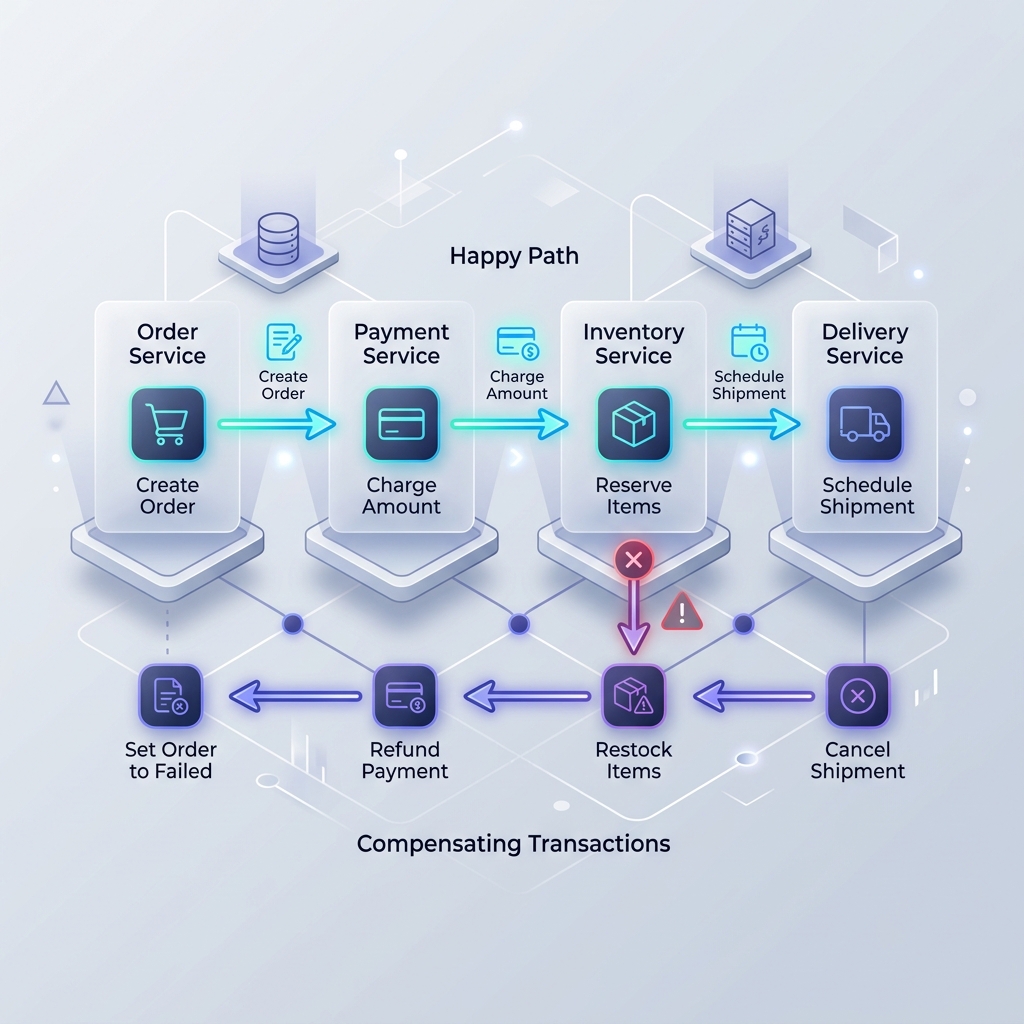
In traditional monolithic applications, maintaining data consistency across multiple entities is straightforward. Relational database engines provide ACID (Atomicity, Consistency, Isolation, Durability) guarantees wrapped inside local SQL transactions. If an order placement, payment deduction, or inventory reserve fails halfway through, calling ROLLBACK reverts every database modification instantaneously. However, when migrating to a modern Microservices Architecture, data management shifts fundamentally. To ensure domain autonomy and independent scalability, each microservice owns its private database. A single business operation—such as processing an e-commerce checkout—now spans multiple service boundaries and database engines (e.g., PostgreSQL for Orders, DynamoDB for Payments, Redis for Inventory).
Microservices Saga Pattern Distributed Transactions Event-Driven Architecture Kafka Orchestration Choreography System Design
Building Autonomous AI Workflows with LLMs

Building Autonomous AI Workflows with LLMs

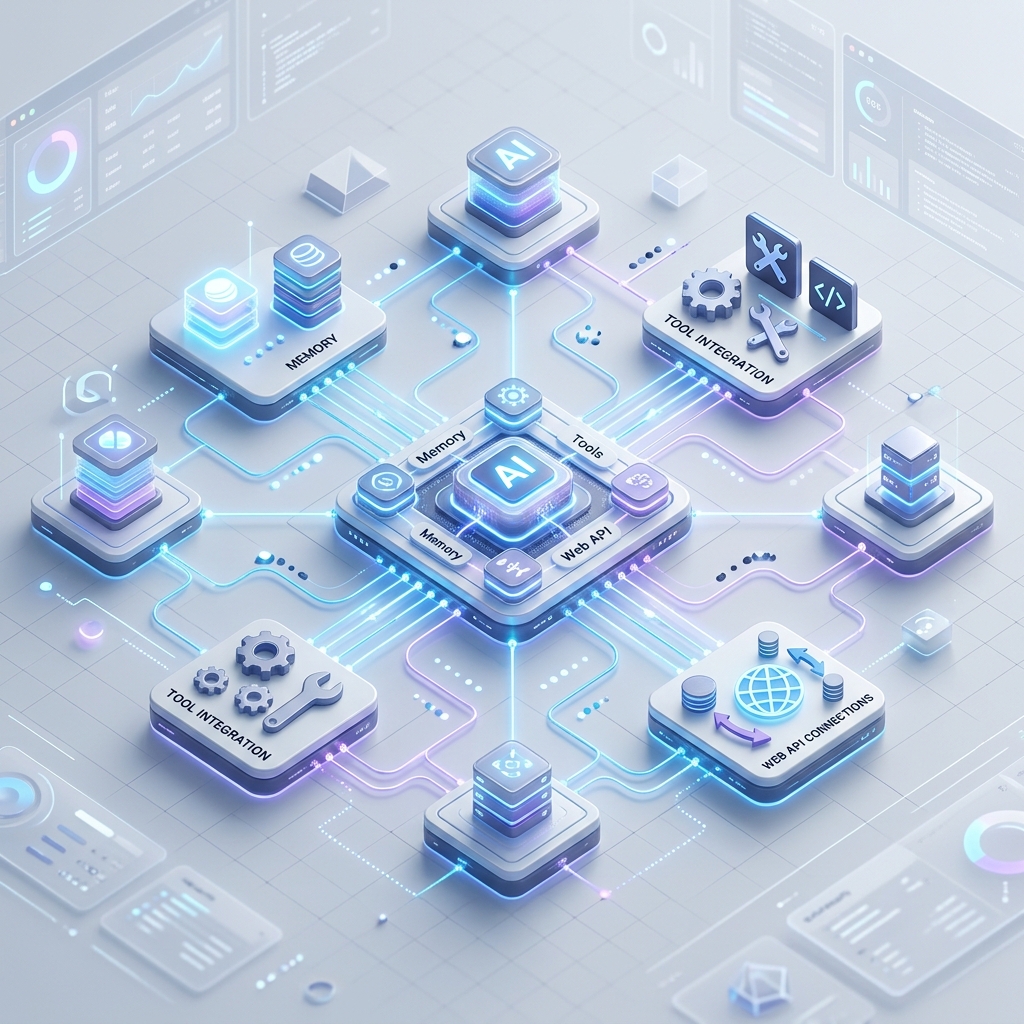
Large Language Models (LLMs) have transformed how we interact with technology, moving rapidly from simple conversational chatbots to reasoning engines capable of driving complex, multi-step actions. While a single prompt-response interaction can be powerful, the real value of generative AI in enterprise settings lies in Autonomous AI Workflows. Rather than relying on human operators to orchestrate every step, autonomous workflows use LLMs as central decision-makers that plan, execute, evaluate, and self-correct tasks over long periods.
AI Agents LLMs Orchestration Software Architecture Machine Learning