The Saga Pattern: Distributed Transactions in Microservices Architecture
In traditional monolithic applications, maintaining data consistency across multiple entities is straightforward. Relational database engines provide ACID (Atomicity, Consistency, Isolation, Durability) guarantees wrapped inside local SQL transactions. If an order placement, payment deduction, or inventory reserve fails halfway through, calling ROLLBACK reverts every database modification instantaneously.
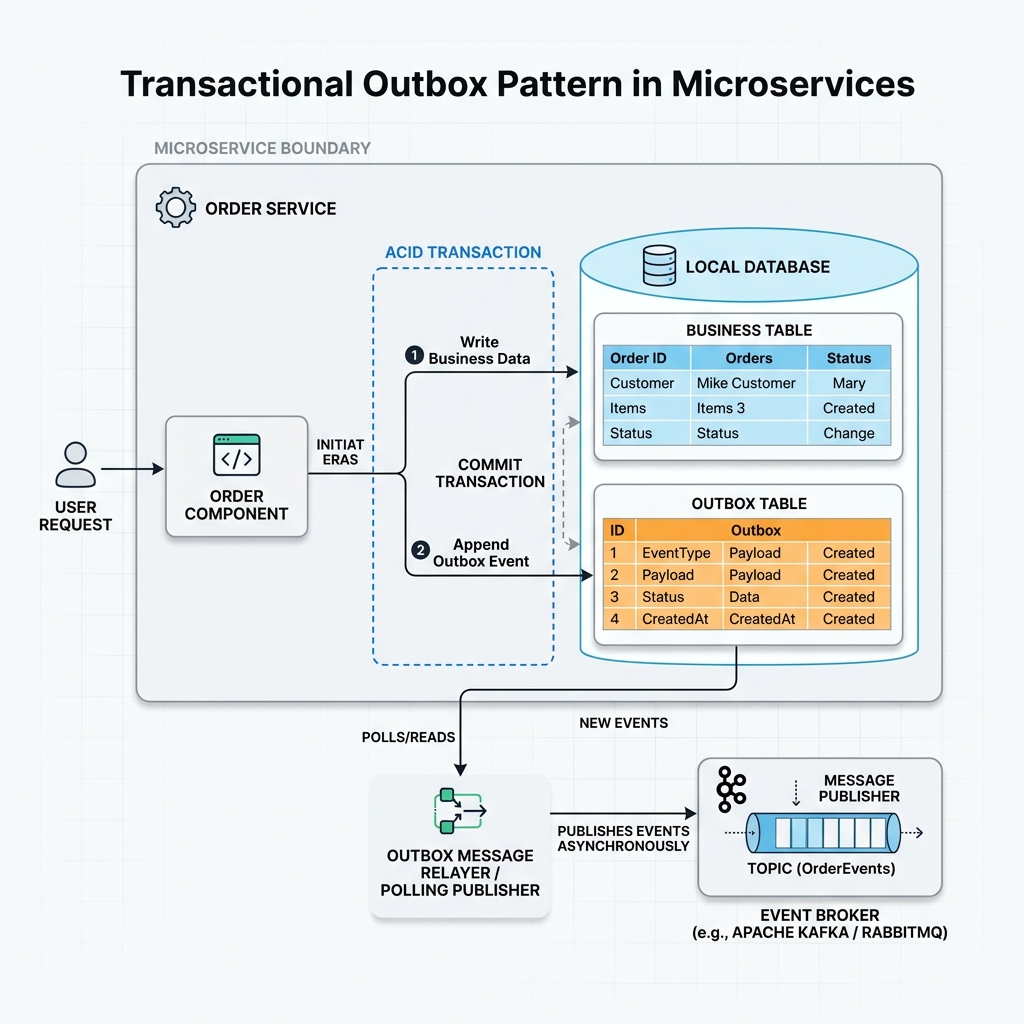
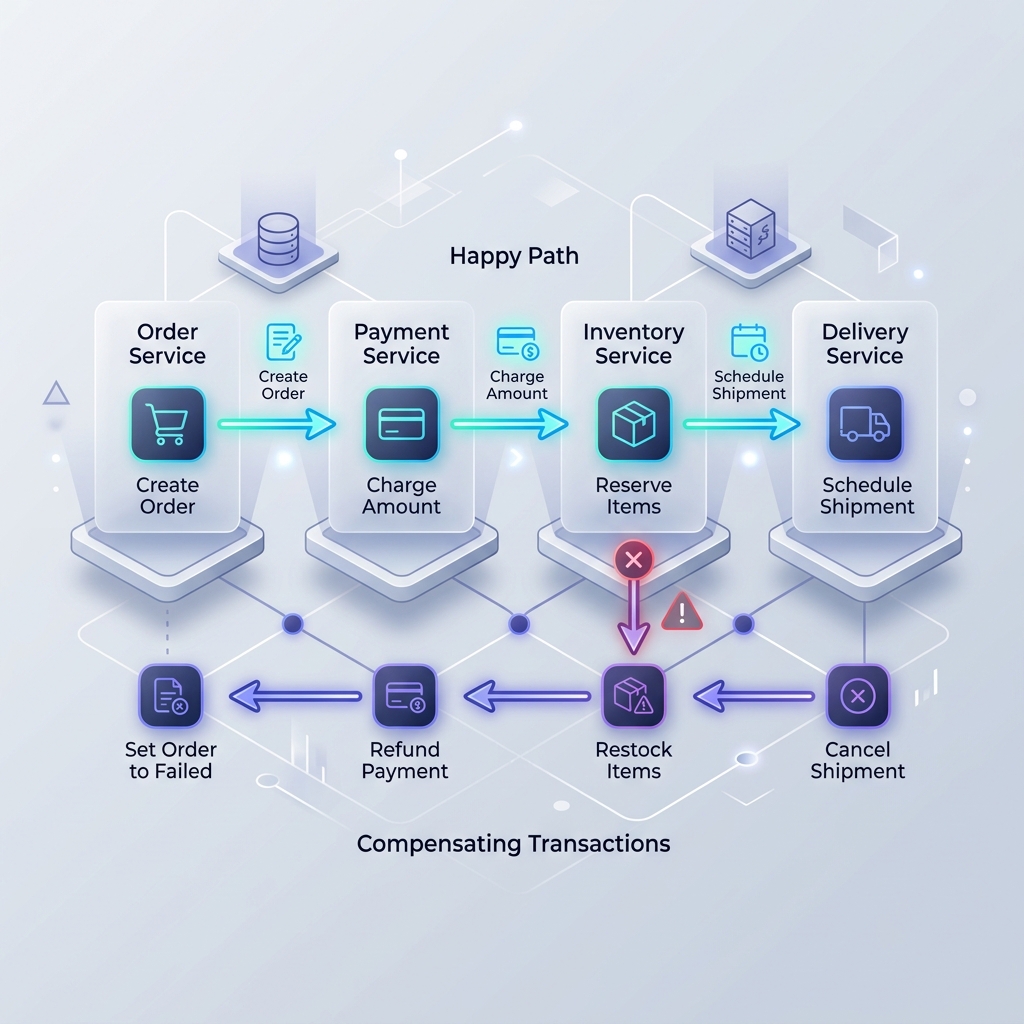
However, when migrating to a modern Microservices Architecture, data management shifts fundamentally. To ensure domain autonomy and independent scalability, each microservice owns its private database. A single business operation—such as processing an e-commerce checkout—now spans multiple service boundaries and database engines (e.g., PostgreSQL for Orders, DynamoDB for Payments, Redis for Inventory).
Microservices
Saga Pattern
Distributed Transactions
Event-Driven Architecture
Kafka
Orchestration
Choreography
System Design