🔥 FREE PRO OFFER Linkage.page Pro Version is 100% Free of Cost till 31 December, 2026! Claim Free Pro

GraalVM

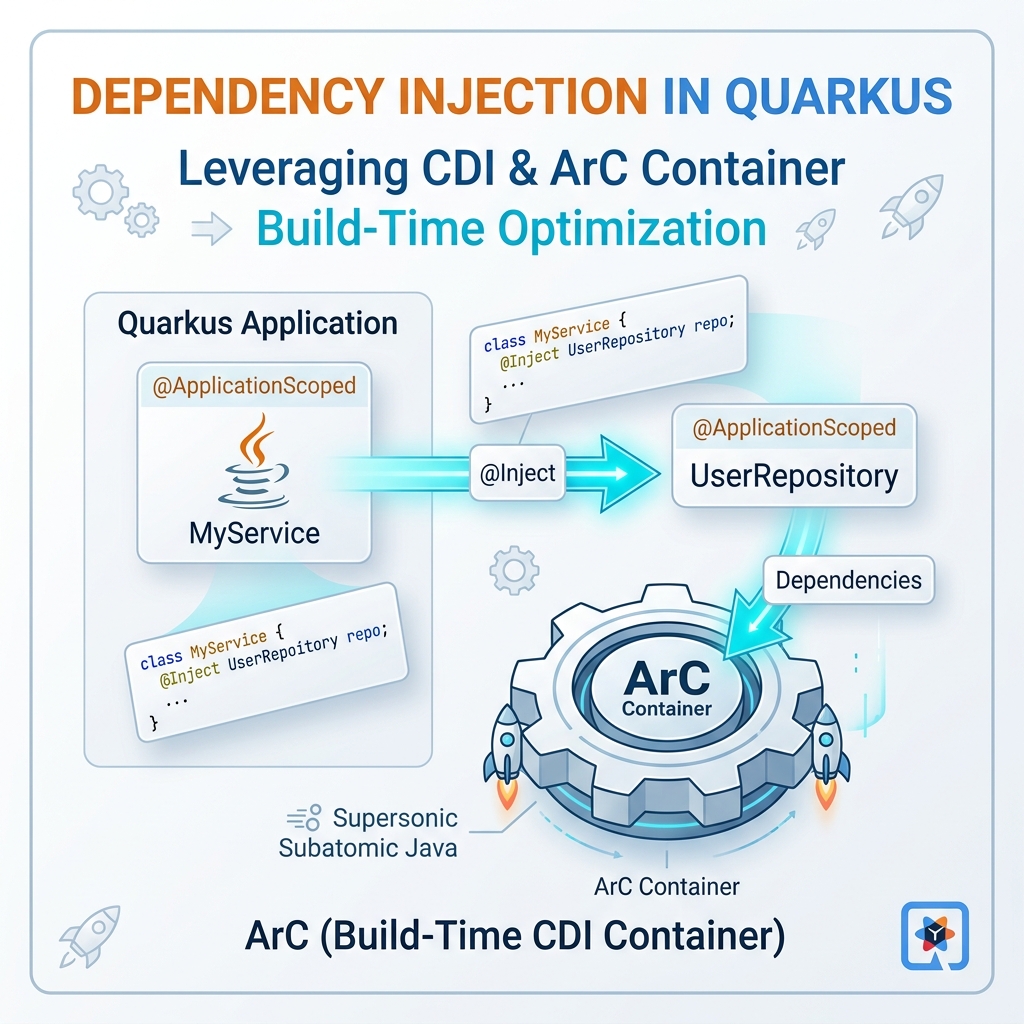
Dependency Injection in Quarkus with CDI: ArC, Scopes, Qualifiers & Build-Time Injection

Dependency Injection in Quarkus with CDI: ArC, Scopes, Qualifiers & Build-Time Injection

Dependency Injection (DI) is the bedrock of modern enterprise Java application development. For years, Java developers relied on Spring IoC (Inversion of Control) or standard Jakarta EE CDI (Contexts and Dependency Injection) containers like Hibernate Weld or OpenWebBeans to decouple component lifecycles, manage service dependencies, and inject configuration properties.
Java Quarkus CDI ArC Dependency Injection Microservices Cloud Native Software Architecture GraalVM
Building REST APIs with Java Quarkus: High-Performance, Reactive & Cloud-Native Guide

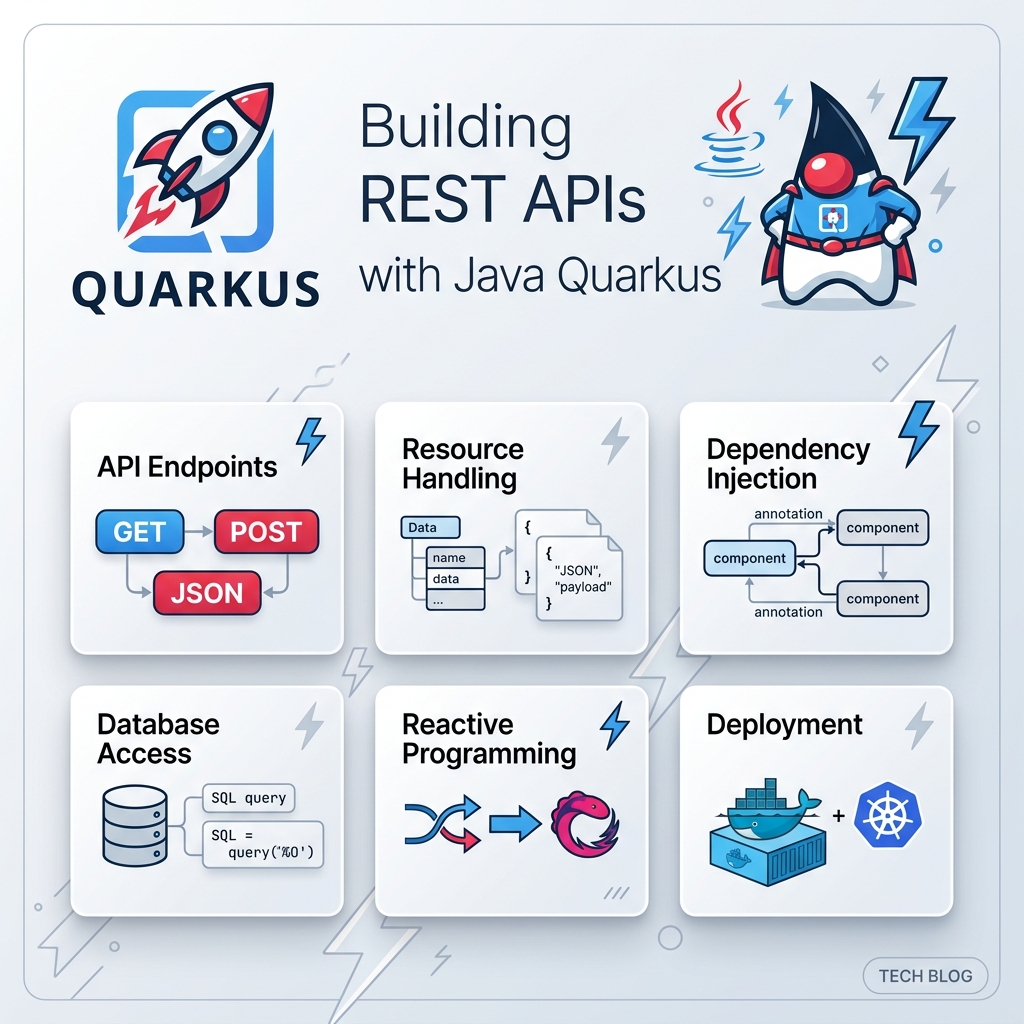
Building REST APIs with Java Quarkus: High-Performance, Reactive & Cloud-Native Guide

In modern enterprise software engineering, building RESTful APIs is the cornerstone of backend system development. For decades, Java developers relied on traditional frameworks like Spring Boot or Jakarta EE to expose RESTful Web Services. However, as cloud computing evolved toward containerized environments (Docker, Kubernetes) and Serverless (AWS Lambda, Knative), traditional Java backends revealed two major bottlenecks: slow startup times (cold starts) and high memory footprint (RSS).
Java Quarkus REST API Microservices GraalVM Reactive Programming Hibernate Panache Cloud Native Software Architecture
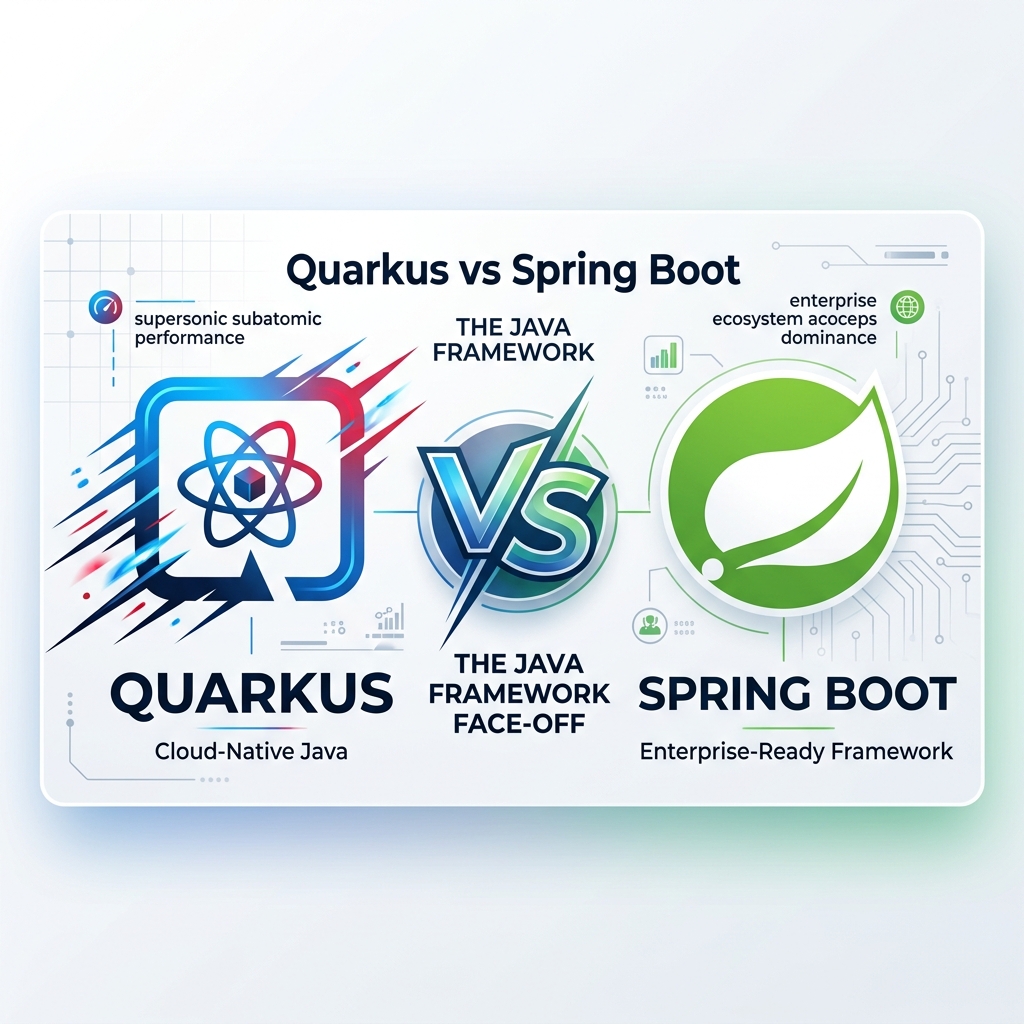
Quarkus vs Spring Boot: Which Java Framework Should You Choose?

Quarkus vs Spring Boot: Which Java Framework Should You Choose?

For over a decade, Spring Boot has reigned supreme as the de facto standard for building enterprise Java applications. Its rich ecosystem, convention-over-configuration paradigm, robust dependency injection engine, and vast community support made Java the bedrock of backend systems worldwide. However, the shift toward Cloud-Native Architectures, Kubernetes orchestration, Docker containerization, and Serverless execution (AWS Lambda, Knative) introduced new technical challenges for backend infrastructure: memory efficiency, instant scaling, and cold-start latency.
Java Quarkus Spring Boot GraalVM Microservices Cloud Native Kubernetes JVM Software Architecture
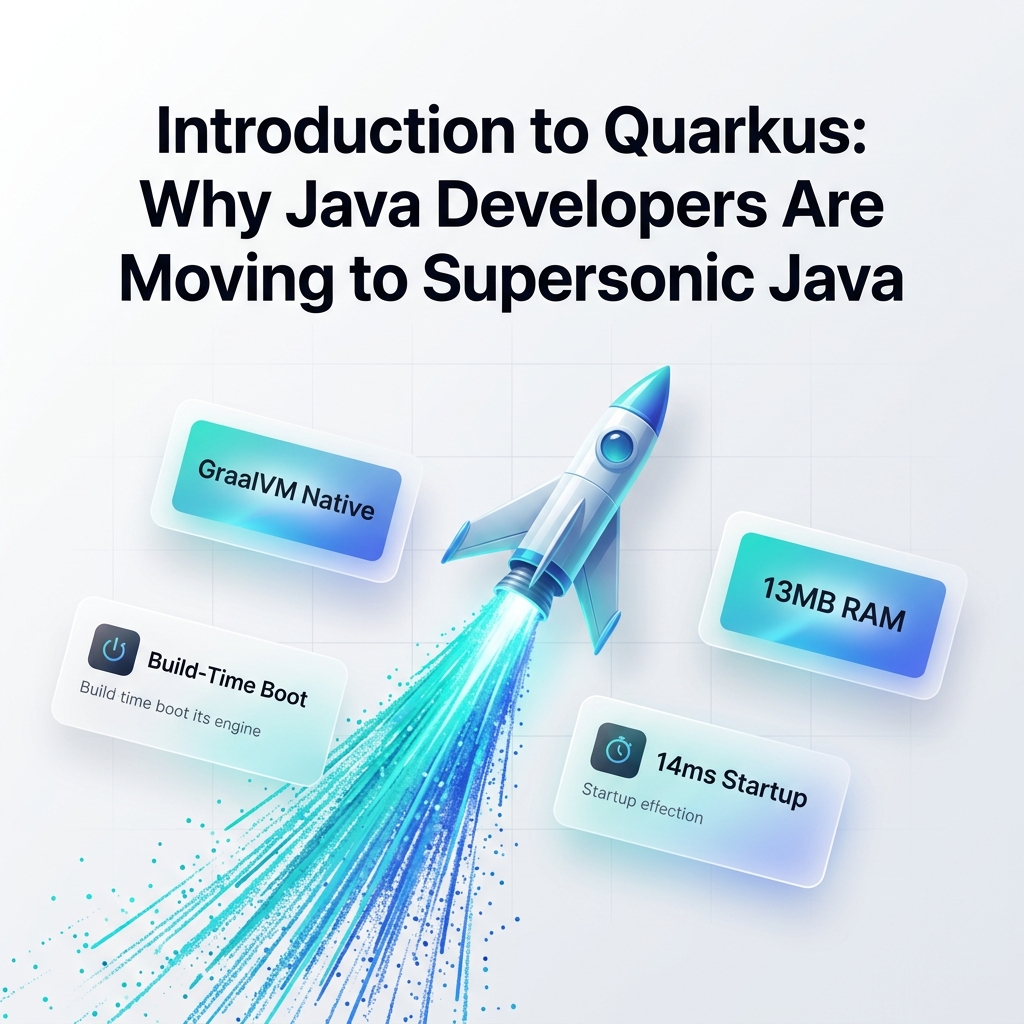
Introduction to Quarkus: Why Java Developers Are Moving to Supersonic Java

Introduction to Quarkus: Why Java Developers Are Moving to Supersonic Java

For nearly three decades, Java has been the dominant force in enterprise software development. Its rich ecosystem, robust object-oriented foundation, platform independence via the Java Virtual Machine (JVM), and battle-tested frameworks like Spring Boot made it the undisputed king of backend infrastructure. However, the shift toward Cloud-Native Architectures, Kubernetes orchestration, Containerization (Docker), and Serverless Computing (AWS Lambda, Knative) exposed a severe vulnerability in traditional Java application frameworks: high memory overhead and slow startup times.
Java Quarkus GraalVM Microservices Cloud Native Spring Boot JVM Software Architecture Serverless