The Rise of Autonomous Software Engineering
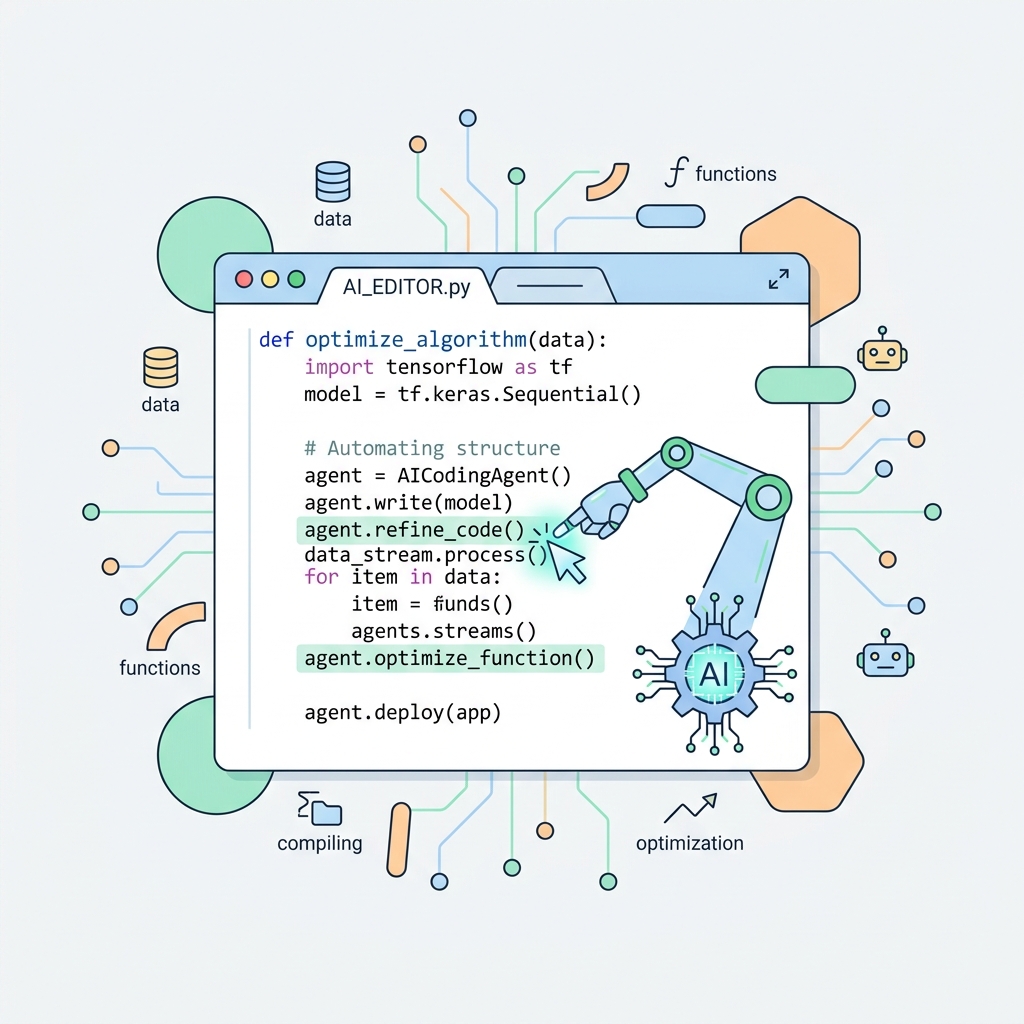
Over the last few years, the role of artificial intelligence in software engineering has evolved at a breakneck pace. We have quickly transitioned from simple inline code autocomplete tools (like early versions of GitHub Copilot) to interactive chat-based programming assistants, and now, we are witnessing the dawn of Autonomous Software Engineering.
Rather than just predicting the next line of code or offering refactoring advice, autonomous AI coding agents can ingest entire codebases, reason about complex architectures, formulate execution plans, write tests, execute terminal commands, analyze compilation errors, and deploy functional applications.
This shift marks a fundamental change in how software is conceived, built, and maintained.
1. The Evolution of Developer Tooling: Autocomplete to Autopilot
To understand the rise of autonomous agents, we must examine the levels of automation in developer tools:
- Level 0 (Manual Coding): Developers write every line of code, relying on memory, documentation, and Stack Overflow.
- Level 1 (Static Analysis & Linters): Editors flag syntax errors, style violations, and potential bugs using AST rules.
- Level 2 (AI Auto-Complete): Tools predict the next few characters or lines of code based on immediate local context (e.g., Copilot, Tabnine).
- Level 3 (Conversational Chat): Developers converse with an LLM in a sidebar, copying and pasting code blocks or asking for explanations of specific snippets.
- Level 4 (Semi-Autonomous Agents): AI agents that can read and write files directly in the codebase, but still require step-by-step human confirmation before execution.
- Level 5 (Fully Autonomous Engineering Agents): The agent is given a high-level goal (e.g., “Build a full-stack dashboard for tracking server telemetry”). The agent autonomously plans the architecture, installs dependencies, writes backend APIs and frontend UIs, runs a dev server, performs browser-based UI testing, debugs errors, and delivers a completed, verified pull request.
Today, we are firmly entering Level 4 and Level 5, driven by agentic architectures and advanced reasoning models.
2. Under the Hood: How Autonomous Coding Agents Think
Autonomous software engineering agents do not simply generate code in a single forward pass. Instead, they rely on a cognitive loop that integrates planning, tool usage, and environment feedback:
- Reasoning and Planning (ReAct): Utilizing architectures like ReAct (Reasoning and Acting), the agent breaks a complex task down into a structured, step-by-step plan. Before taking any action, the agent writes down its thought process, analyzing the codebase structure and identifying dependencies.
- Tool Orchestration: The agent is equipped with tools to interact with the environment, including:
- File Editors: To read, write, and modify files with precise line-level control.
- Terminal Shells: To run build scripts, compile code, execute unit tests, install packages, and manage git repositories.
- Web Browsers: To navigate to local web applications, click buttons, fill forms, read console logs, and take screenshots to verify UI layouts.
- Self-Correction and Healing: When the agent runs a compiler or a test suite and encounters an error, it doesn’t give up. It parses the compiler error or stack trace, locates the offending file, rewrites the code, and re-runs the tests. This loop continues until all tests pass and verification is complete.
- Semantic Search and Indexing: To navigate large codebases, agents use vector search (RAG) and Abstract Syntax Trees (AST) to trace imports, function definitions, and database schemas, giving them a global understanding of the codebase.
3. The Business and Technical Implications
The rise of autonomous software engineering is not just a novelty; it is a disruptive force that will redefine industry dynamics:
- 10x Developer Velocity: By delegating boilerplate generation, environment configuration, and debugging to AI agents, human developers can focus purely on high-level architecture and business logic.
- Self-Healing Production Code: In the future, when an exception occurs in production, an autonomous agent can instantly spin up a sandbox environment, reproduce the bug, draft a regression test, write a patch, run the test suite, and deploy a hotfix in minutes.
- Lowering the Barrier to Entry: Non-technical founders, product managers, and designers can build fully functional prototypes and iterate on software interfaces using natural language, democratizing technology creation.
4. The Future of Human Software Engineers
A common concern is whether autonomous AI agents will replace human engineers. The consensus among technology leaders is that human roles will shift, not disappear.
Human engineers will transition from being logic translators (translating thoughts into syntax) to logic directors (defining requirements, verifying architecture, managing security policies, and orchestrating agents). Creativity, empathy, user experience design, and complex systems architecture will remain uniquely human domains.
The future of coding is collaborative: a symbiosis where humans set the destination, and autonomous agents navigate the terrain.
Tags
Empower Your Digital Presence & Workflows
Explore top-tier tools built by Ghaznix to streamline your links, surveys, and brand growth.