The Coding Revolution: How AI is Transforming Software Development
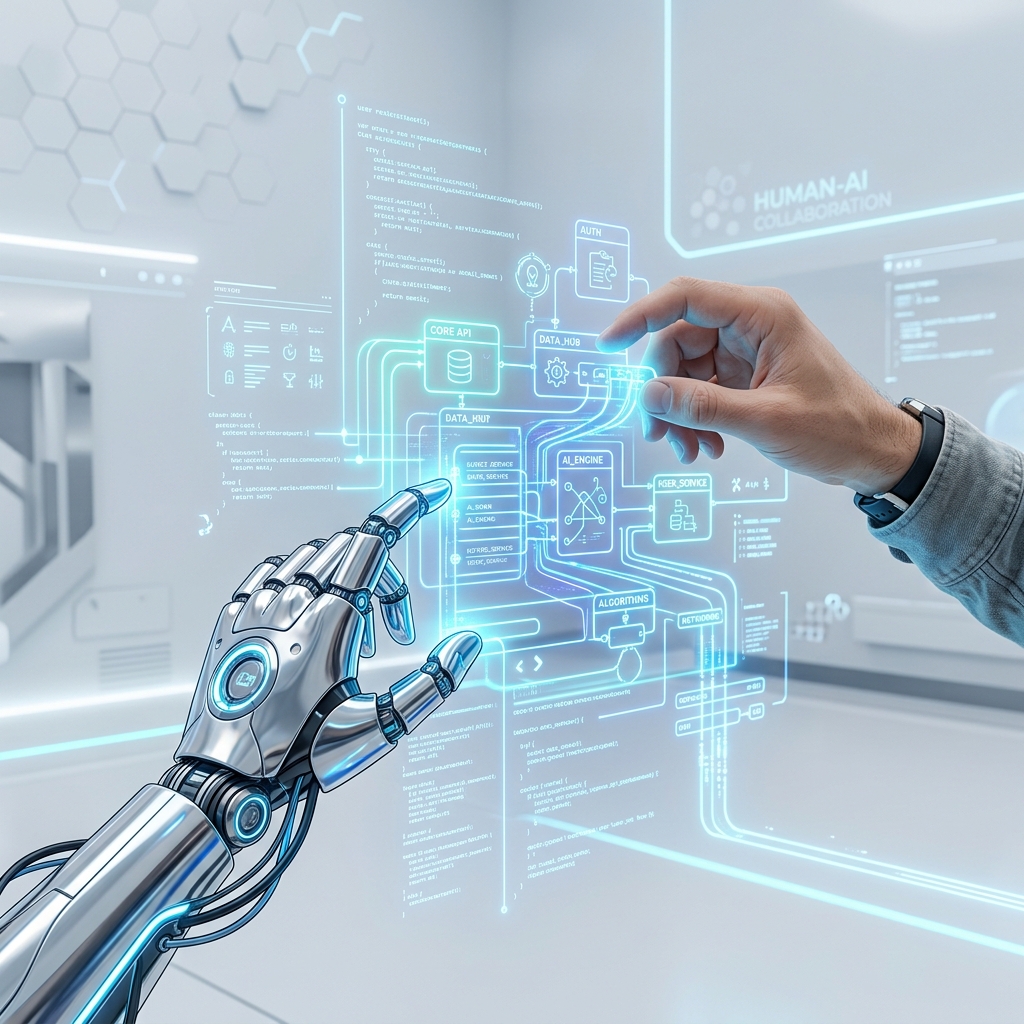
The landscape of software development is undergoing its most profound transformation since the invention of the high-level programming language. Artificial Intelligence, once limited to simple syntax auto-completion, has evolved into a collaborative engineering partner. From generating boilerplate code to architecting complex distributed systems, AI is redefining what it means to write software.
This shifts the traditional role of a developer from a manual code writer to a system orchestrator and product designer.
1. The Evolution of Code Generation: Beyond Basic Copilots
In the early 2020s, AI assistants in IDEs functioned primarily as advanced code completion tools. They could predict the next line of code or generate simple utility functions based on comment prompts.
Today, generative AI has advanced into autonomous development agents. These models are capable of:
- Multi-File Modifications: Instead of suggesting single-line adjustments, modern AI agents can analyze entire codebases, trace import dependencies across multiple directories, and implement comprehensive feature updates across separate frontend, backend, and database schema files simultaneously.
- Contextual Reasoning: Armed with massive context windows, AI tools ingest whole documentation libraries, architectural standards, and codebase rules, producing code that perfectly adheres to local engineering style guides and design patterns.
- Dependency Resolution: When building features, AI agents dynamically determine necessary package dependencies, suggest security-hardened libraries, and write clean package configurations.
2. Overhauling the Testing and Debugging Lifecycle
Historically, testing and debugging have occupied up to 50% of an engineer’s time. AI is aggressively compressing this cycle by shifting security and robustness checkouts leftward in the lifecycle:
- Automated Test Suite Generation: Modern AI pipelines automatically write complete suites of unit tests, integration tests, and edge-case mocks. By analyzing input parameters and branch logic, they ensure near-total test coverage in seconds.
- Predictive Debugging: AI models analyze stack traces and log streams to instantly identify root causes. Instead of simply highlighting an error, they present optimized code diffs that fix the bug while explaining the underlying architectural rationale.
- Real-Time Security Auditing: By analyzing code patterns as they are written, AI tools flag common vulnerabilities—like SQL injection, CSRF, and prompt injection—before the code is committed, proposing secure, drop-in structural remedies.
3. High-Level System Architecture and Design
AI’s value is rapidly ascending from the syntax layer to the conceptual layer. Systems architects are now utilizing conversational LLMs to brainstorm, model, and refine complex system topologies:
- Database Schema Design: AI can rapidly output optimized relational schemas (like PostgreSQL tables) or flexible NoSQL structures based on high-level business rules.
- API Modeling: Generating complete OpenAPI specs, RESTful routes, and GraphQL schemas with built-in validation rules is now a matter of natural language design.
- System Trade-offs: Developers can debate structural decisions—such as monorepos vs. microservices, or choosing between cache engines like Redis or Memcached—receiving nuanced, domain-specific arguments tailored to their exact workload.
4. Will AI Replace Software Engineers?
The rise of highly capable AI coding systems has naturally sparked concerns about the future of the engineering profession. However, the emerging reality is not replacement, but leverage.
AI acts as a force multiplier. It takes care of the cognitive load associated with syntax, boilerplate, and low-level configuration, freeing software engineers to focus on higher-value responsibilities:
- System Integration & Reliability: Designing robust, resilient distributed networks and ensuring system-wide reliability remains a deeply human architectural challenge.
- Product Strategy & User Experience: Understanding human needs, translating business requirements into precise product logic, and creating delightful user experiences.
- Security & Governance: Evaluating AI outputs, validating guardrails, and managing regulatory compliance and data privacy standards.
The software engineer of 2026 is no longer just a coder—they are a high-level orchestrator directing a fleet of specialized AI agents.
Conclusion: Embracing the Future of Code
The AI-driven transformation of software development is not a threat to developers; it is an incredible unlock. By automating the repetitive, manual tasks of coding, AI allows engineers to spend more time doing what they love: solving problems, inventing new features, and building transformative products.
The most successful developers in the next decade will not be those who fear AI, but those who learn to orchestrate it to build software faster, safer, and better than ever before.
Empower Your Digital Presence & Workflows
Explore top-tier tools built by Ghaznix to streamline your links, surveys, and brand growth.