AI-Powered Debugging: The Future of Software Development
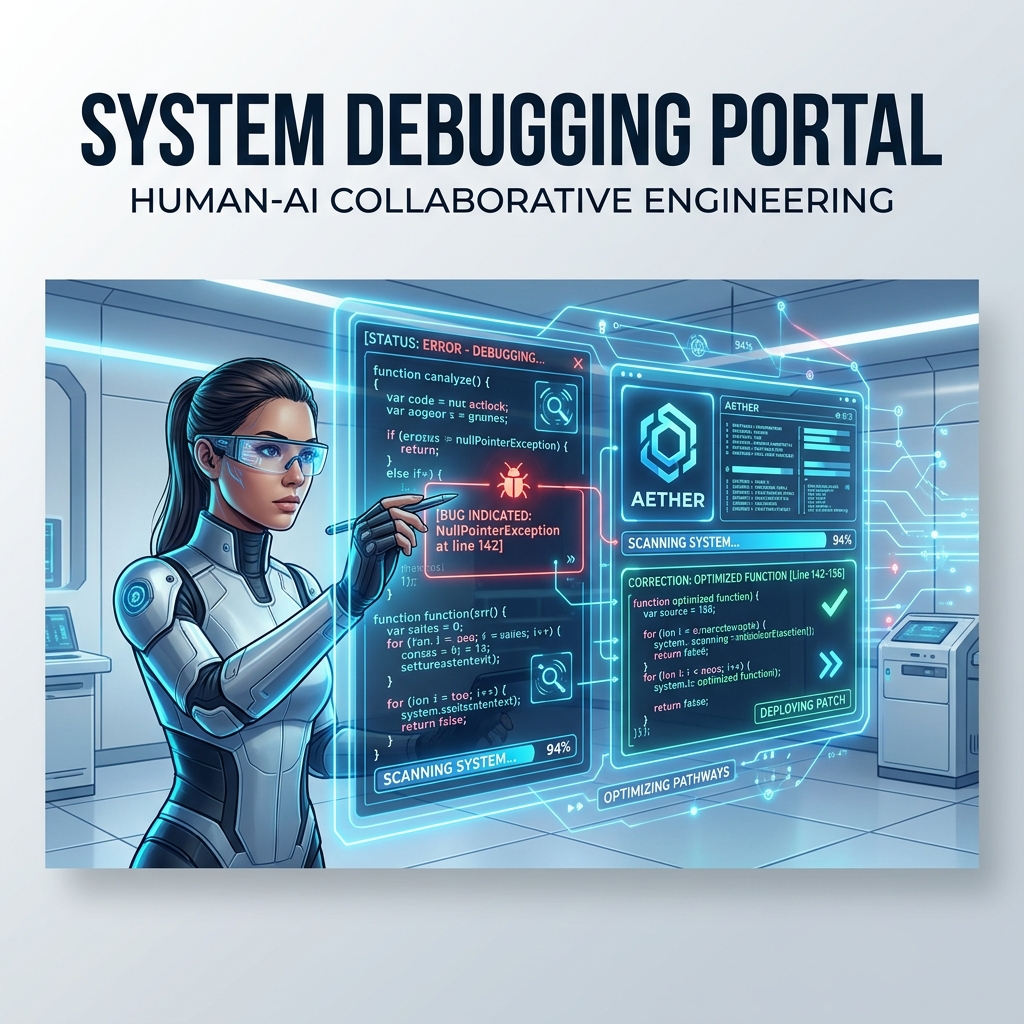
For decades, debugging has been the ultimate test of a software engineer’s patience. From scanning thousands of log lines to inserting temporary print statements and stepping through execution lines in a debugger, resolving errors has remained a manual, highly cognitive, and time-consuming bottleneck.
However, artificial intelligence is shifting debugging from a reactive, manual rescue operation to a proactive, automated, and self-healing system workflow.
1. Predictive Error Tracing: Finding Bugs Before They Happen
Traditional debugging begins after a crash has occurred or a bug has been reported. AI-powered debugging systems turn this paradigm on its head by utilizing predictive error tracing.
By analyzing the runtime semantics of code paths and simulating complex user inputs, modern AI debugging agents can identify:
- Edge-Case Race Conditions: Simulating high-concurrency environments to predict where thread locks or database connections might fail.
- Memory Leaks and Resource Exhaustion: Tracing variable scopes and garbage collection patterns to flag code blocks that slowly consume memory under specific workloads.
- State Machine Desynchronization: Mapping out all possible application state transitions to find logical paths that leave the application in an unstable state.
2. Contextual Stack Trace Parsing
When an error occurs in production, it usually throws a stack trace. For human engineers, analyzing a stack trace is only the beginning—they must cross-reference it with git blame history, recent dependency updates, environment variables, and the system architecture.
AI-powered debuggers perform this entire research cycle in milliseconds by parsing stack traces contextually:
- Repository-Wide Context Retrieval: The AI agent doesn’t just look at the line of code that failed; it retrieves context from imported packages, parent functions, database schemas, and configuration files.
- Telemetry and Log Fusion: By merging logs, CPU performance metrics, and stack traces, the AI reconstructs the exact state of the server at the microsecond of failure.
- Dependency Tree Resolution: If the issue stems from a subtle version incompatibility in a nested third-party library, the AI tracks the node module or package lock files to isolate the root cause.
3. Real-Time Semantic Vulnerability Detection
Static Application Security Testing (SAST) tools have existed for a long time. However, they are notorious for producing false positives because they rely on simple AST (Abstract Syntax Tree) pattern matching.
AI-powered debuggers go beyond syntax rules to perform semantic analysis:
- Insecure Data Flows: Tracing input data from untrusted sources to execution sinks, flagging SQL injection, Cross-Site Scripting (XSS), and Cross-Site Request Forgery (CSRF) vulnerabilities.
- Cryptographic Weaknesses: Identifying outdated cipher suites, hardcoded credentials, and weak entropy sources.
- Business Logic Flaws: Understanding the intent of the application to flag logic bypasses, unauthorized access points, and race conditions in financial transactions.
4. Automated Patching and Verification
The ultimate goal of AI-powered debugging is not just to locate the problem, but to solve it. Automated patching closes the loop between detection and remediation:
- Drafting Optimized Diffs: Once a bug is identified, the AI agent generates a clean, minimal code diff that fixes the root cause without introducing regressions.
- Automated Test Suite Execution: The proposed fix is instantly deployed to an isolated container where the existing unit and integration test suites are run. If the tests pass, the fix is validated.
- Regression Analysis: The AI dynamically writes new unit tests targeting the specific edge case that caused the failure in the first place, ensuring the bug never returns.
Conclusion: The Era of Self-Healing Codebases
AI is not replacing the need for developers to understand how their systems work. Instead, it is removing the tedious, manual parts of system maintenance. By automating error tracing, contextual stack trace parsing, security auditing, and code patching, AI-powered debugging enables software engineers to focus on what they do best: designing robust architectures, implementing innovative features, and building premium products.
The future of software development belongs to self-healing codebases that learn from their errors and adapt dynamically to maintain peak performance and security.
Empower Your Digital Presence & Workflows
Explore top-tier tools built by Ghaznix to streamline your links, surveys, and brand growth.