The Future of AI-Driven Vulnerability Discovery
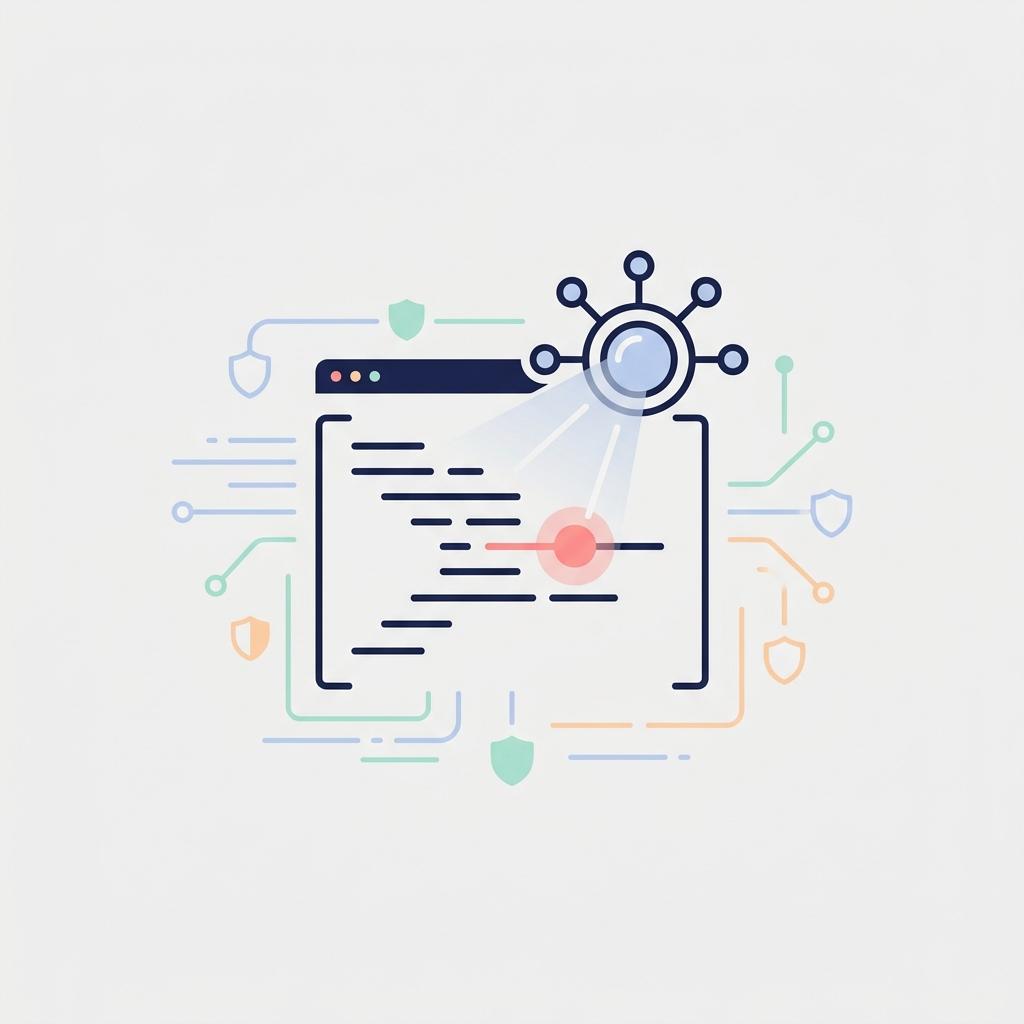
In the rapidly evolving landscape of cybersecurity, software security has long been defined by reactive defense mechanisms. Traditional Application Security (AppSec) relies heavily on static code checkers (SAST) that match predefined syntactic patterns and dynamic checkers (DAST) that input random payloads (fuzzing) to induce program crashes.
However, as software architectures increase in complexity and integration speeds accelerate under modern CI/CD pipelines, signature-matching and blind fuzzing are no longer sufficient. The next generation of vulnerability discovery is cognitive, autonomous, and self-learning—driven entirely by Artificial Intelligence (AI).
1. Legacy AppSec: The Limits of Signatures and Random Fuzzing
To understand the promise of AI-driven vulnerability discovery, we must first examine the limitations of legacy tools:
- The Static Pattern Trap: Static Application Security Testing (SAST) scanners search for known bad signatures (e.g., matching the use of
strcpyin C). They struggle to comprehend code context, leading to a massive volume of false positives that waste developer time, or false negatives where logical vulnerabilities remain hidden. - Dynamic Blind Spots: Dynamic Application Security Testing (DAST) and traditional fuzzers generate semi-random inputs to find memory corruption bugs. However, without semantic understanding of the target program, fuzzers spend precious compute cycles executing superficial code paths, unable to bypass deep conditional logic or complex authentication barriers.
- Logical and Multi-Step Flaws: Modern security threats rarely consist of a single bad API call. Instead, they exploit chained logical flaws across multiple microservices. Traditional tools are entirely blind to these systemic design errors.
2. Cognitive Source Code Analysis: LLM-Based Security Agents
Large Language Models (LLMs) are changing the security paradigm. Instead of analyzing code as plain text or rigid syntax trees, LLM-based security agents comprehend the semantics and design intent of code.
- Abstract Semantic Understanding: Security agents can analyze complex data flows, taint sources, and sink locations across multiple programming languages. By tracking how user input flows through API gateways, controllers, database models, and view layers, AI can pinpoint precise vulnerabilities like Server-Side Request Forgery (SSRF) and broken access controls.
- Agentic Planning and Bug Hunting: Modern AI agents do not just output single-turn answers. They operate in a loop: they draft code models, formulate hypothesis-driven security tests, run temporary local execution blocks, analyze runtime outputs, and iteratively refine their search for vulnerabilities.
- Context-Aware Code Review: During pull requests, AI-based code auditors read delta changes and understand context. They can warn developers about subtle security implications of a modified helper function, preventing threats from entering the master branch.
3. Hybrid Security: Machine Learning Guided Dynamic Fuzzing
The union of machine learning with dynamic testing is producing highly sophisticated hybrid scanners. By replacing random input generation with ML-guided mutations, smart fuzzers achieve unprecedented code coverage.
- Neural Code Modeling: Deep learning models analyze target binaries to predict which branch inputs are likely to trigger deeper execution blocks.
- Reinforcement Learning (RL) Guidance: Reinforcement learning agents receive rewards when they discover new execution states or uncover edge cases, training the scanner to dynamically adapt its payloads.
- Semantic Path Traversal: Instead of blindly mutating strings, ML-guided fuzzers generate structurally valid payloads (such as valid JSON, SQL, or binary protocols) that bypass early input verification stages, exposing deep logic bugs.
4. Auto-Exploitation & Self-Healing: Closing the DevSecOps Loop
Discovering a vulnerability is only half the battle. The true goal of modern SecOps is minimization of window-of-exposure. AI enables autonomous security loops that discover, verify, and remediate bugs in real time.
- Automated Exploit Generation (AEG): To confirm if a bug is truly exploitable (and not a false positive), AI agents construct proof-of-concept (PoC) exploits in isolated sandbox environments.
- Autonomous Program Repair (APR): Once an exploit is verified, generative AI models propose targeted code modifications to fix the underlying vulnerability without breaking existing unit tests.
- Continuous Self-Healing Pipelines: In the near future, CI/CD systems will integrate self-healing agents that autonomously receive bug reports from production, generate safe patch commits, verify them, and roll them out to production within minutes of a threat discovery.
5. Defensive Shields and the Dual-Use Dilemma
While AI-driven vulnerability discovery promises to elevate defensive posture, it represents a double-edged sword. The same cognitive capabilities that allow defenses to patch vulnerabilities can be utilized by adversaries to discover and weaponize zero-day exploits.
- Symmetric Capability Escalation: Threat actors are already leveraging private LLMs to automate security code audits on open-source repositories, rapidly developing exploits for unpatched components.
- Adversarial Hardening: Security teams must employ adversarial AI to continuously simulate attacks against their own systems (autonomous red teaming), hardening codebases before malicious players can launch real-world exploits.
Conclusion: Building the Self-Securing Enterprise
The future of software security is not a manual checklist; it is an active, self-learning ecosystem. As software grows more complex, AI-driven vulnerability discovery will shift from being an optional premium tool to a core engineering necessity. By combining deep semantic comprehension, machine learning-guided fuzzing, and automated code repair, organizations can build self-securing systems that anticipate, find, and heal their own flaws before they can be exploited.
Empower Your Digital Presence & Workflows
Explore top-tier tools built by Ghaznix to streamline your links, surveys, and brand growth.