Distributed Ledger Technology (DLT): Beyond the Blockchain Hype
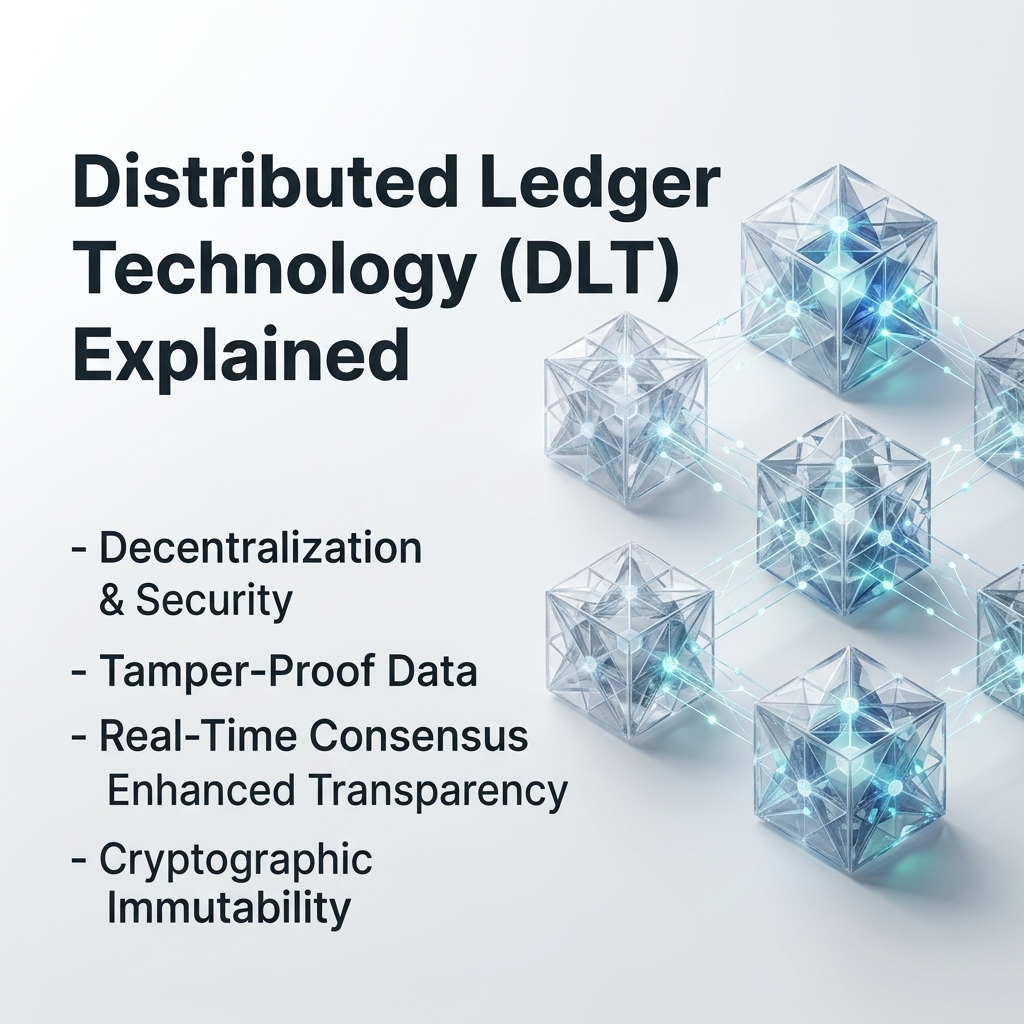
In the rapidly evolving digital landscape of 2026, Distributed Ledger Technology (DLT) has transitioned from a buzzword into the foundational infrastructure of global finance, logistics, and digital identity. While “Blockchain” often steals the spotlight, it is merely one flavor of the broader DLT ecosystem.
To truly understand the future of secure, decentralized data, we must look at DLT as a whole.
1. What is Distributed Ledger Technology?
At its core, DLT is a digital system for recording the transaction of assets in which the transactions and their details are recorded in multiple places at the same time. Unlike traditional databases, distributed ledgers have no central data store or administration functionality.
Every node (computer) in the network processes and verifies every item, thereby creating a record of each item and generating a consensus on each item’s veracity.
2. DLT vs. Blockchain: What’s the Difference?
A common misconception is that DLT and Blockchain are the same. In reality, all Blockchains are DLTs, but not all DLTs are Blockchains.
Think of it like this: Blockchain is a specific type of DLT where data is organized into “blocks” that are cryptographically linked in a chronological chain. Other DLTs might use different data structures, such as graphs or side-chains, to achieve similar goals without the rigid block structure.
3. The Major Types of DLT
As of 2026, three primary architectures dominate the landscape:
- Blockchain: The most famous implementation (e.g., Bitcoin, Ethereum). It bundles transactions into blocks. Great for security but can face scalability hurdles.
- Directed Acyclic Graphs (DAG): Instead of a chain, transactions are linked to multiple previous transactions. This allows for high throughput and zero-fee transactions, making it ideal for the Internet of Things (IoT).
- Hashgraph: A patented consensus mechanism that uses “Gossip about Gossip” to achieve high speeds and fair ordering, often used in enterprise-grade private networks.
4. Why Does DLT Matter in 2026?
The value of DLT lies in its three pillars:
- Immutability: Once a transaction is recorded and consensus is reached, it cannot be altered or deleted.
- Transparency: All participants can view the ledger, ensuring a single version of the truth.
- Security: Decentralization means there is no “single point of failure.” Attacking the network requires compromising a majority of nodes simultaneously.
5. The Frontier: Tokenization and AI
The most exciting development this year is the Tokenization of Real-World Assets (RWA). From real estate to carbon credits, physical assets are being digitized on DLTs to enable fractional ownership and instant global settlement.
Furthermore, the convergence of AI and DLT is solving the “Black Box” problem of artificial intelligence. By recording AI training data and decision logs on a distributed ledger, organizations can ensure that their AI models are transparent, auditable, and secure.
6. Conclusion: The Invisible Infrastructure
Today, you might be using DLT without even knowing it. It’s the engine behind your instant cross-border bank transfer, the proof of authenticity for your luxury watch, and the secure vault for your digital healthcare records.
DLT is no longer a “future” technology—it is the invisible glue holding the modern digital economy together.
Empower Your Digital Presence & Workflows
Explore top-tier tools built by Ghaznix to streamline your links, surveys, and brand growth.